Building for an audience of one: starting and finishing side projects with AI
100 points by lorisdev 24 hours ago | 63 comments

canada_dry 20 hours ago
This is what I've been doing for a couple years now: having AI help to code/test projects that I've had in my long TODO list but would never realistically started/completed. AI is now pretty capable of producing decent code if your specifications are decent.

I still think that non-programmers are going to have a tough time with vibe coding. Nuances and nomenclature in the language you are targeting and programming design principles in general help in actually getting AI to build something useful.

A simple example is knowing to tell AI that a window should be 'modal' or that null values should default to xyz.

reply
DisruptiveDave 10 hours ago
I completed three "micro apps" solely for myself (well, one for my wife and I) over the last month, all vibe coded. I sent two of them (sort of micro mindfulness tools) to a therapist friend. "WOW, I didn't know you could do all that!"

What I told her was, I, in fact, could not do all that. I'm a marketer who's been in software companies for 15 years. Zero coding ability. However, through repeated exposure to programmers, PMs, and designers - and because a major part of my role is to develop a nuanced understanding of how our products create value for users - I've learned how to think like a product designer and developer (albeit to a non-professional degree).

That's the part of the "anyone can now build software" sentiments that seems to be skipped over. Anyone can now have their ideas coded for them, but that doesn't automatically create the ability to make all the right decisions during the design and build process. It doesn't create thoughtfulness and consideration and the willingness to say "no" to a feature because, while it seems cool, it will detract from the core purpose of the overall tool.

reply
rustyhancock 14 hours ago
I've a similar history of AI use as you but every so often I simply describe what I want and try out what it creates. Honestly in these past 2 years the pace of improvement has been stunning.

Yesterday I was inside one of the tools that a just build it prompt created and I asked it to use a NewType pattern for some of the internals.

It wasn't until I was in bed that I thought why? If I'm never reading that code and the agent doesn't benefit from it? Why am I dragging my cognitive baggage into the code base?

Would a future lay vibe coder care what a New type pattern is? Why it helps? Who it helps?

I think the pedagogy of programming will change so that effective prompting will be more accessible.

reply
theobreuerweil 11 hours ago
I do think about this a lot. On the one hand, you might be right, and it may not matter at all. On the other, we often do that kind of stuff because it makes it harder to slip up by accident and/or makes the code easier to read and understand. These things are surely helpful to AI agents in the same way that they are useful to people?

I guess it depends on whether the extra time you could invest in that kind of thing pays back in terms of context windows, code quality or speed of AI code generation.

reply
reenorap 18 hours ago
"Make the window show up on top, you can't click away from it. Also clear all the fields when you first show the window."
reply
tempaccount5050 18 hours ago
"Ok, here's a static bar on the top of the page" as it disappears as you scroll. You can now no longer click anything else on the page. You said "can't click away" and it did show up on top. As a 30 year coder that never did any UI, this is this shit I run into constantly. I can create awesomely cool and fast back end stuff, and can create better UIs than I've ever been able to, but not knowing the nomenclature trips me up constantly.
reply
reenorap 7 hours ago
If you try it out, the prompt above correctly creates a modal dialog. LLMs are much much better than you give it credit for.
reply
the_harpia_io 10 hours ago
I've been doing this too and it's genuinely changed how I think about side projects. used to be I'd plan for weeks then abandon after hitting some annoying plumbing work - auth, deployment, whatever. now I just describe what I want and iterate. finished more projects in the last 3 months than the previous 2 years.

but there's a weird thing that happens when you build for yourself and don't read the code carefully. I caught one of my little internal tools storing API keys in localStorage because that's what the LLM decided to do and I never questioned it. for a personal tool running locally it probably didn't matter much but it made me think about what else I'm not catching. the whole "audience of one" framing kind of implies you can skip the boring review parts but idk, some of those boring parts exist for reasons even when nobody else will use it. I still vibe code everything now but I've gotten way more paranoid about actually reading what gets generated, at least the parts that touch anything sensitive

reply
Mashimo 18 hours ago
I strongly agree with op.

It's a massive accelerator for my dumb and small hobby projects. If they take to long I tend to give up and do something else.

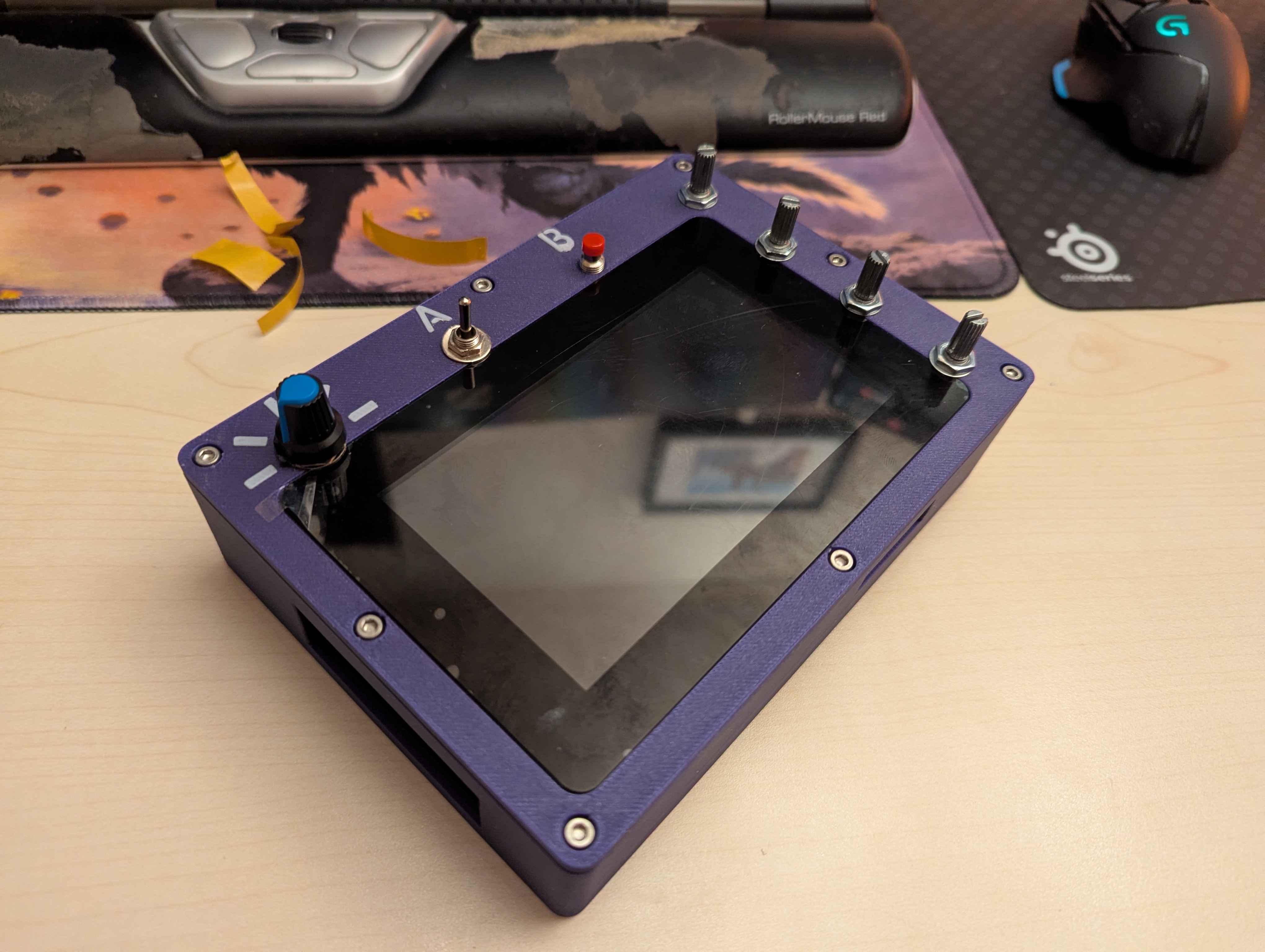
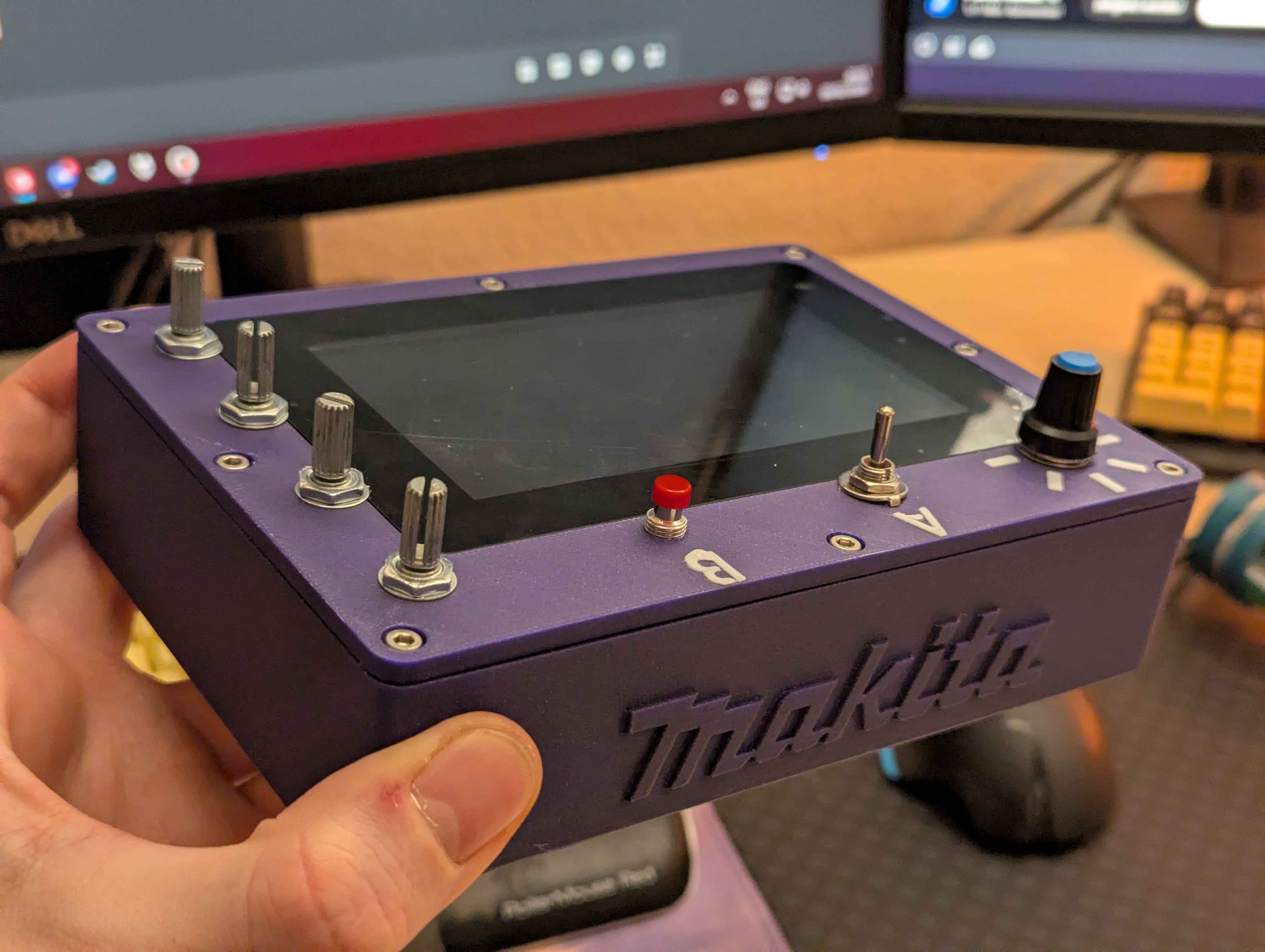
Recently I designed and 3d printed a case for a raspberry pi, some encoders and buttons, a touchscreen, just to contol a 500 EUR audio effects paddel (eventide H9)

They official android app was over if the worst apps I ever used. They even blocked paste in the login screen...

Few people have this fx box, and even fewer would need my custom controller for it., build it for an audience of one. But thanks to llms it was not that big of a deal. It allowed me to concentrate on what was fun.

https://cdn.discordapp.com/attachments/1461079634354639132/1...
https://cdn.discordapp.com/attachments/1461079634354639132/1...
reply
dirkk0 18 hours ago
very cool! Did the LLM just help you with the software, or also with the 3D print?
reply
Mashimo 17 hours ago
Thanks. Llm did "only" the software part. A tiny bit with answering questions about encoders and dpio pins.

I recently for fun gave an llm an image of a dj mixer and record player, in order to recreate a 3d model. It somewhat worked, but it's very basic.

reply
parpfish 21 hours ago
in the age of LLM-built side projects... what's the right venue for sharing these things with other people?

i feel like the expectations for a "Show HN" project are too high for a passing around a silly little toy that I had the robot throw together. product hunt is for things that are actual products/businesses. so maybe you throw it in a targetted subreddit for a niche interest group?

seems like there should be a marketplace for silly little side-projects, but i'm not sure how you keep it from getting overrun

reply
password4321 10 hours ago
Once a month HN user david927 does a "What are you working on?" post (among others: https://hn.algolia.com/?query=%22What%20are%20you%20working%...) that is perfect for you to drop things like this into as a comment. It looks like this month's is still open for comments though unlikely to generate much interest after the first few days.

It should be made an official HN tradition like whoishiring.

reply
Retr0id 21 hours ago
Unfortunately, demand for silly little side projects is at an all-time low.

I'm debating whether to share the one I'm working on at all. I made it for myself so maybe it should stay that way.

reply
parpfish 21 hours ago
i really want to see the silly little side projects that everybody is making!

not because i think i'll actually use any of them, but because they could inspire me to do something different in my silly little side projects

the goal isn't "product release", it's elementary school "show and tell"

reply
realharo 17 hours ago
Usually online communities have dedicated days for such things. Like a "side project Sunday" or such, with one large thread.
reply
embedding-shape 16 hours ago
HN has that every day, and a dedicated section for it: Show HN. Link in the top bar :)
reply
realharo 15 hours ago
Yeah, but that's not the same, as most readers will just skip over that. What I said is more similar to HN's monthly "who's hiring" threads or "what are you working on" threads. Like https://news.ycombinator.com/item?id=46937696. I find those much more interesting.
reply
pgt 9 hours ago
Me too! Maybe it should be called "Slop HN:" :)
reply
haxel 19 hours ago
Consider Tiny Tool Town? "A place for stupid-delightful tools made with love."

https://www.tinytooltown.com/

reply
vunderba 20 hours ago
There are places like r/sideprojects but as with all non-niche boards it can get crowded pretty fast.

I’ve often thought about standing up a subreddit specifically for side projects but with the proviso of:

- No sign up

- No ads

- No subscription/payments of any kind

Open-source is welcome but optional.

reply
realharo 17 hours ago
I think the problem with such places is, they just become a dump for self-promotion by people who otherwise don't participate at all. The opposite of an actual community. That's why even reddit used to have a 10-to-1 rule of thumb about posts like that (which would be very easily gamed today).
reply
vunderba 9 hours ago
Yeah, I think you're right. Asking people to give feedback and contribute instead of just self-promoting is like expecting everyone to maintain a 1:1 torrent ratio - it's just not gonna happen.
reply
kristiandupont 18 hours ago
I shared this tool for remembering recurring tasks on LinkedIn: https://github.com/kristiandupont/balls-in-the-air and it got quite a bit of attention.

No login or signup is required so it's very easy to try out and quite fun to play with, which probably helped. I think the time people are willing to invest in something before getting some sort of reward is approaching sub-second territory.

reply
lawgimenez 11 hours ago
I marketed my macOS app from here to reddit to LinkedIn, Blusky and only people from Discord bought it.
reply
CuriouslyC 11 hours ago
In theory, you write/vlog about the human side of making it, or lessons learned, or something else that people will find value in related to the thing you make. Over time, maybe a few people start to care.

Ironically, if people care about you, you can pretty much serve up hot buttered shit and get traction.

reply
eshaham78 10 hours ago
[dead]
reply
Arifcodes 9 hours ago
The "audience of one" framing is spot on, and I think it reveals something important about how AI changes the economics of side projects. The cost of building something just for yourself used to be weeks of learning a new stack. Now it's a conversation and some token spend.

But the workflow described here is the real takeaway. Spec first, containers for sandboxing, git as your safety net. That's not a beginner workflow, that's a senior engineer adapting their existing discipline to a new tool. Most "vibe coding" advice skips this entirely and jumps straight to "just prompt and ship."

The 80/20 split is what I keep seeing too. The agent gets you a working prototype fast, but the last 20% (error handling, edge cases, the stuff that makes software actually reliable) still requires you to understand the code. If anything, AI makes that gap more visible because you hit the wall faster.

reply
adithyassekhar 9 hours ago
> The cost of building something just for yourself used to be weeks of learning a new stack. Now it's a conversation and some token spend.

I remember this being the opposite. Some used to do side projects to play with and learn a new stack. That's how we all ended up here don't you think?

reply
Debeli 10 hours ago
Thia ia exactly how I use Claude and it makes my life easier. I'm not a dev, started learning Python somewhere around a year ago. Then tried to play around with Claude and to be honest, I got pretty good at it :D Built several websites, apps (the bottom ones mostly for myself - but one is being used by a record label my friends run and I'm pretty proud of it). There are a lot of pros and cons for doing these things (not sure I'd dare to go production and distribute anything publicly before a full code audit), but I'm sure that these tools are gonna get so good at it (if they're not already) that I'll be confident to release stuff. The best thing that happened with me playing with Claude is - even though I can't code, I leared a lot about stuff around it - git, terminal, deps, etc. So I'm definitely enjoying this
reply
patchorang 10 hours ago
This has been exactly my experience too. I switched from Spotify to Plex, but discovered there really isn't a music focused desktop player. So I vibe coded one, exactly how I want my music player to work (albums not playlists/tracks as the central item). I was so happy with my desktop app, I built a mobile version to use instead of PlexAmp. There are some bugs I'm ironing out, but they are both I've stopped using PlexAmp and Spotify entirely.
reply
michaelteter 17 hours ago
I have more than a few side projects that began as late night discussions with an llm. A couple of those projects reached a level of completion where I use the products daily, and one project reached production (a game you can find referenced on my profile).

I have had similar experiences to the author, and I’ve found that just working with a single agent in Antigravity (on the Gemini Pro subscription) is adequate. The extra perceived speed and power of multiple agents and/or Claude Code really didn’t match the output.

With a single Gemini (or sometimes switching to Claude Opus which inexplicably Google provides a generous amount of for free via AG) gives me incremental results so fast that I spend most of my time thinking about what I want (answering unplanned product questions or deciding how to handle edge cases).

I’m fact, sometimes I just get exhausted with so much decision making. However, that’s what it takes to build something useful; we just aren’t accustomed to iterating so fast!

reply
HarHarVeryFunny 9 hours ago
I wasn't aware that Antigravity personal provides free access to Opus/Sonnet! Maybe this is just for limited time, but certainly to be taken advantage of! Thanks!
reply
echelon 17 hours ago
Anyone who hasn't tried AI for coding absolutely should.

This is the future.

I don't think we'll ever manually write code again. It's just so much faster.

reply
lelanthran 12 hours ago
> I don't think we'll ever manually write code again. It's just so much faster.

If velocity was the most important criteria, well, we could always write tech-debt faster, we just chose not to.

Unless the LLM/agent is carefully curated, it will produce tech-debt faster than it can fix it.

For some products, it seems not a problem - you just want to validate PMF on a product (of course you'll have a new problem now, which is that everyone with $20 to spare can do the same).

For others, a longer-life product is preferable. We shall have to see how things shake out. My best guess would be that we have more useless stuff that is free or close to free, and fewer useful stuff that is free or close to free.

reply
ath3nd 17 hours ago
> This is the future.

NFTs and crypto were also the future.

> I don't think we'll ever manually write code again. It's just so much faster.

More work for the people who like to fix tech debt.

reply
RugnirViking 15 hours ago
> NFTs and crypto were also the future.

I find this the least convincing argument ever. Its only a gotcha if you assume all/most of the people excited about one were excited about the other. Personally I never met a real person who gave a shit about crypto, much less nfts. But AI interest is everywhere, with it roughly 50/50 in my life of people who are uneasy with it vs use it regularly.

I don't disagree about monumentous amounts of tech debt and risk being created. Its my hope for my own job and skills being relevant going into the future. I do like playing with it, understanding it as a tool. But it is just a tool, not a machine god, and regularly fallible.

reply
KellyCriterion 12 hours ago
> crypto, much less nfts

Actually I met one guy who was somehow deep in NFTS when this Boring-Ape-NFT took off and he told me how much money he has now (on paper) - then they were vaporized and he lost everything.

reply
echelon 16 hours ago
You need to try it before you knock it.

I was a doubter. This will literally work 100x faster than you. It can one-shot 1kLOC across dozens of files in mere minutes and understand the context.

You'll need to pay back a lot of those performance gains in reviewing the code, but the overall delta is a 2x speedup at minimum. I'd say it's closer to 4x. You can get a week's worth of work done in a day.

A human context switches too much and cannot physically keep up with these models. We're at the chess take off moment. We're still good at reviewing and steering.

reply
HumanOstrich 12 hours ago
Calm down. That kind of mania is for Twitter.
reply
ath3nd 10 hours ago
[dead]
reply
chasd00 9 hours ago
I feel like the coding assistants are opening doors for hobbyists the same way 3d printing did. If you’re into a hobby with physical components like rc-anything, robotics, or just need a one off part to fix something a 3D printer is a game changer. In the same way, if you’re into writing software for personal projects or just filling a discreet need ClaudeCode is a game changer.
reply
wordpad 9 hours ago
3d printing led to some big companies being created.

Maybe, we will see solo employee unicorn startup very soon.

reply
arjunbajaj 16 hours ago
This resonates with me a lot, and well-timed too!

I've always been unhappy with the way tasking/todo app (don't) work for me. I just started building a TUI in Zig (with the help of Codex) to manage my daily tasks. And since I'm building it just for me, the scope is mine to determine too.

reply
sicher 16 hours ago
I'm in the same camp. The last few months I've been building a couple of applications (editors) for my own work - and since it's so fast I've had Claude spin off to build Zig tools and libraries for markdown parsing, PDF generation, a Scheme implementation for embedding and more. (If anyone's interested they are at my Codeberg: https://codeberg.org/sicher)
reply
theteapot 14 hours ago
Right now I'm trying to get an AI (actually two ChatGPT and Grok) to write me a simple HomeAssistant integration that blinks a virtual light on and off driven by a random boolean virtual sensor. I just started using HomeAssistant and don't know it well. +2H and a few iterations in, still doesn't work. Winning.
reply
mvcosta91 14 hours ago
Forget both of them and throw everything at my boi Opus 4.6.
reply
lsp 13 hours ago
HomeAssistant is probably doing too much for what you need. Imo it's not a good piece of software. https://nodered.org/ is maybe a better fit. Or just some plain old scripts.
reply
daveguy 7 hours ago
It looks like the point is Home Assistant integration. I seriously doubt they need an led to be blinked on and off based on a mock sensor. That's either "for the integration test" or "as a placeholder for something more". Either way, the is failing.
reply
password4321 10 hours ago
Can anyone share their experience using AI to polish a working prototype towards a more professional/public release? "Are we there yet?"
reply
concats 14 hours ago
> Sidenote: I wonder what's going to happen when the crazy money runs out and Anthropic, OpenAI & co have to start charging for more than it costs them to run the models. Hopefully by then the open source models will have caught up?

How brutal will the enshittification phase of these products be?

Will the 10x cost or whatever be something that future employers will have to pay, or will it be a more visible impact for all of us? Assuming no AGI scenario here and the investments will have to be paid back with further subscription services like today.

I really hope Open Source (Open Weights) keep up with the development, and that a continuation of Moore's Law (the bastardized performance per € version) makes local models increasingly accessible.

reply
ainch 13 hours ago
Is it proven that they serve the models at cost? Amodei has said that Anthropic's models make back their training cost - the reason they're so deep in the red is because they're investing substantially more in subsequent runs, and R&D dwarfs inference cost[1]. If the tech plateaus I would expect to see a lot of that R&D spend move into just powering inference.

[1] https://epoch.ai/data-insights/openai-compute-spend

reply
citizenpaul 16 hours ago
>The age of actually finishing side projects is here

This is a really good summary of how I've experienced AI put into words. I'm not really sure how this can be monetized though.

I'm not going to burn $200-1k per day on agents to do some side projects that have been on the back burner. The only reason I'm doing it now is the heavily subsidized or free available models all over the place.

reply
nake89 12 hours ago
I'm paying 10 dollars per month on GitHub Copilot. Gives access to good enough models. Not best, but great value for money.
reply
password4321 10 hours ago
https://news.ycombinator.com/item?id=46936105 Billing can be bypassed using a combo of subagents with an agent definition

> "Even without hacks, Copilot is still a cheap way to use Claude models"

reply
sicher 16 hours ago
I'm paying for claude max which is 90 euros a month. It's just enough for my needs. I typically run 2 agents in parallel and seldom run out of tokens.
reply
sicher 16 hours ago
Oh, I think I misunderstood. Do you mean if we paid the real cost of the compute it would be the numbers you mention?
reply
ryanackley 10 hours ago
Yes, AI companies are bleeding money with current pricing. Your AI usage is heavily subsidized by investor dollars.
reply
sicher 9 hours ago
Better take the opportunity then and have it build good stuff while it lasts. :)
reply
Cycl0ps 21 hours ago
I’m in agreement with the blog post. I’ve been treating AI more like a tool and less like a science experiment and I’ve gotten some good results when working on my various side projects. In the past much of my time was taken up by research and learning the various little parts of how everything works. What starts as a little python project to play around with APIs ends with me spending 5 hours learning tkinter and barely making any API calls.
reply
danielbln 21 hours ago
LLMs have finally freed me from the shackles of yak shaving. Some dumb inconsequential tooling thing doesn't work? Agent will take care of it in a background session and I can get back to building things I do care about.
reply
mikelevins 20 hours ago
I'm finding that in several kinds of projects ranging from spare-time amusements to serious work, LLMs have become useful to me by (1) engaging me in a conversation that elicits thoughts and ideas from me more quickly than I come up with them without the conversation, and (2) pointing me at where I can get answers to technical questions so that I get the research part of my work done more quickly.

Talking with other knowledgeable humans works just as well for the first thing, but suitable other humans are not as readily available all the time as an LLM, and suitably-chosen LLMs do a pretty good job of engaging whatever part of my brain or personality it is that is stimulated through conversation to think inventively.

For the second thing, LLMs can just answer most of the questions I ask, but I don't trust their answers for reasons that we all know very well, so instead I ask them to point me at technical sources as well, and that often gets me information more quickly than I would have by just starting from a relatively uninformed google search (though Google is getting better at doing the same job, too).

reply
xyzsparetimexyz 16 hours ago
> Start with a conversation, and explore the problem space with the LLM. The idea here is to gather options and ideas. Once you have a clear vision of what you want to build, ask for a detailed specification. Iterate on the spec until you understand it fully and are happy with it.

Maybe its just the specific language being used here but I really hate talking to these things. They inject way too much personality into things, especially Claude and are still too sychophantic and could lead you down a wrong path. I'd much rather just give them instructions.

reply
hmcamp 16 hours ago
I’ve had similar results with multi-agent approach.

It consumes lots of tokens, required more setup and at the end of the day had pretty much the same output as if I had used a single agent.

reply
embedding-shape 16 hours ago
You have any concrete examples of source code that your multi-agent approach has produced?
reply
genie3io 16 hours ago
[dead]
reply