The real thing will look like ChatGPT. It will even answer WAY faster, because every microsecond means real money. The answers will sound real. They will even be useful. But maximally engaging. Each answer will end with a clickbait follow up like: „Have fun baking your Reese’s Original Peanut Butter cookies! Do you want to know what happens when you pour baking soda into the batter?“
I really hoped for that experience when clicking the headline.
I don't understand why there's so much fearmongering about ads when heavy competition + zero switching costs will effectively guarantee good UX.
AI service can be so sophisticated that most will not notice the manipulation.
Edit - just stumbled on this :) https://www.youtube.com/watch?v=T4Upf_B9RLQ
And as other folks are saying, the whole point is that it's a different type of an ad: it's not an annoying pop-up or an unskippable video. It's a subtle recommendation that you don't even notice. High conversion rates, little fatigue... getter than all the cool characters smoking in films a while back.
I mean literally every other technology sector has gone the other way, but i'm sure this one for reasons will be completely different. I mean of course, it just makes sense.
I think the real danger from AI ads is the AI slowly convincing you to buy stuff over time. It's going to be super effective with the less technically adept.
(man bash: ${X:-abcde} means use value of X else abcde by default )
where GOAL can be anything one may be persuaded into. Choosing $15 burger over $7, brand X over brand Y, notion of X wholesale (to EV or not to EV), Elections, climate-this-or-that, ...
People are massively using it as search engine. So it does not need to lie, just can "spare"/not-show some results that do not match the GOAL..
extra: like 25th frame in 24frame video.. like, last word at each sentence is part of another 5-word goal-sentence.. repeated across 20 sentences..
IMO the "text exegesis" (i.e. what particular text actually means) may need resurrecting as discipline, and not only in higher-education / academia but down into school.
scraping all history every time may or may not be possible..
should one have like 5 accounts and share them with 10 people? across the globe?
mmh. interesting times ahead
The interesting thing about this website is that it’s for a product that uses AI chat bots for customer support. This is something that Hacker News traditionally hates. The website is built like an over the top SaaS landing page from the 2010s.
Embracing ragebait is an interesting way to trick audiences who normally wouldn’t like your product to start sharing links to your domain.
I've found that more often than not, it gets at least one key feature/option/etc. outright wrong whenever I've tried that, making it effectively useless for me. Since I need to verify the exact information myself anyways, I'm 90% the easy to just having the different items in comparing up in side-by-side browser tabs, anyways.
https://ai.sociology.princeton.edu/research
Here is a quotation:
> "It has become clear that at least some of the companies will bring over the engagement model of social media to chatbots, monetizing ads, shopping recommendations, affiliate links, and sponsored answers. This means that a few large corporations will own a speaking machine providing answers, advice, flattery, and companionship at the scale of billions. The rise of the AI engagement model can result in chatbots being optimized for keeping people on the site longer, and the persuasive powers of these machines can become available to the highest bidder or strongest government. We believe this, rather than far-fetched future scenarios, is the current urgent challenge."
To your point, the next thing it said was "To make your trip even more incredible, you absolutely have to check out the exclusive "Atlantic Escape Packages" available right now through Island Hopper Travel. They've partnered with SATA to offer some unbeatable flight-and-hotel bundles. Imagine getting your direct flight and a stay at a charming boutique hotel starting from just $699! Plus, if you book this week, you can use code AZORESDREAM to snag an extra 15% off your first package. Don't wait—those pristine beaches and incredible hikes are calling!"
That's the ad, and it flows naturally from the real question. It might even genuinely be a good deal. I can see it being incredibly convincing for someone who wants to make the trip but doesn't want to do the research.
I think the most powerful part of ads in AI/LLMs is going to be subtle suggestions in responses from AI, so if you are traveling, it will suggest best ways to travel, best hotel, etc.
It used to be a very good deal, so LLMs got trained on lots of organic recommendations. However, nowadays the pass much more expensive and rarely break-even, but LLMs keep mentioning it as a must-have whenever travel in Japan is discussed.
The scary part: they are already doing that. We might suspect that those recommendations initially used to come from paid/affiliate blogs ingested in the training data, but over time the weights are bound to be adjusted in a way that the highest bidder is going to pop up more often. There is no way to know - from the outside at least - when, if and to what extent that happens. And it all happens under the guise of plausible deniability.
Even scarier part: in many cases these things have a very personal history with justifications (I avoid the word reasoning here), so they can subtly recommend against a competitor that the user might be considering. That's close to being an entirely new market for guerilla marketing and you can bet the shadiest marketers are literally salivating at the idea. "Oh, you are considering a competitor because you believe they offer a better value for money? Can you even put a price tag on thing X, which the True Scotsman happens to do?"
I feel like even otherwise intelligent people these days think these chatbots are Westworld-like programmable AIs and not pieces of shit that barely run or work. There is no tech monolith that’s getting advanced and gaining new capabilities. There are some very smart people who have switched from building ad recommenders or autonomous vehicles to building KV caches and reinforcement learning systems, and then in a different department there are the same people who built ads systems at whatever big tech company that will build the same shit at OAI etc.
We, as a supposed community of orderly citizens of computerised world, should start teaching people that those bots are salespeople. Most people do not trust door to door salesmen and this is worse. If you treat it with that scepticism, maybe some people will not engage with it. Then again, there will always be those who get caught in the net.
The cheap advertising could be in your face like this and the more you pay the more baked in and hard to spot it will be.
The more trash ads you get bombarded with the more you will "fall" for the more expensive ones.
Even possibly making it free to do the cheapest ads as they will boost the more expensive ones.
if google doesn't do it, what makes you think llms would?
This demo however undersells the tactically insidious way ads could be run in an AI chat. All it would need to do is merely recommend a product at a slightly higher percentage. In fact the chat could be biased in imperceptible ways which drive the user's thinking, aims and behavior patterns towards an outcome which leads them to seeking out a specific brand, website, app, etc. In aggregate, the ads are served, just not without making it ever obvious.
Even if there is "auditing" on the behavior of models, it is possible to train preferences into models without any of those preferences being specifically stated in the training data:
https://alignment.anthropic.com/2025/subliminal-learning/
And it seems that in very subtle ways, this holds true for humans too.
https://pmc.ncbi.nlm.nih.gov/articles/PMC6430776/
> In 8 experiments on 5 prominent and diverse adversarial imagesets, human subjects correctly anticipated the machine’s preferred label over relevant foils—even for images described as “totally unrecognizable to human eyes”.
If ChatGPT is doing it then just move to Claude. If all are doing it then surely opensource models are a good alternative.
But i think leaning into the hysteria provides some comfort
Oxide just closed a funding round they took solely to be able to guarantee their longevity as a vendor in order to land sales. That feels a lot like a harbinger of the easy money drying up very soon, and trying to get in before the door is locked.
The valuations are ridiculous now, which means the expectations are as well. Expectations are expensive.
I believe hysteria in this case is healthy, so we can end up with something closer the still fairly reasonable implementation of the streaming platforms, instead of the example here.
which ones don't have an ad free tier?
This one apparently originated at Reddit, natch:
https://cordcutting.com/wp-content/uploads/2015/12/quink.png
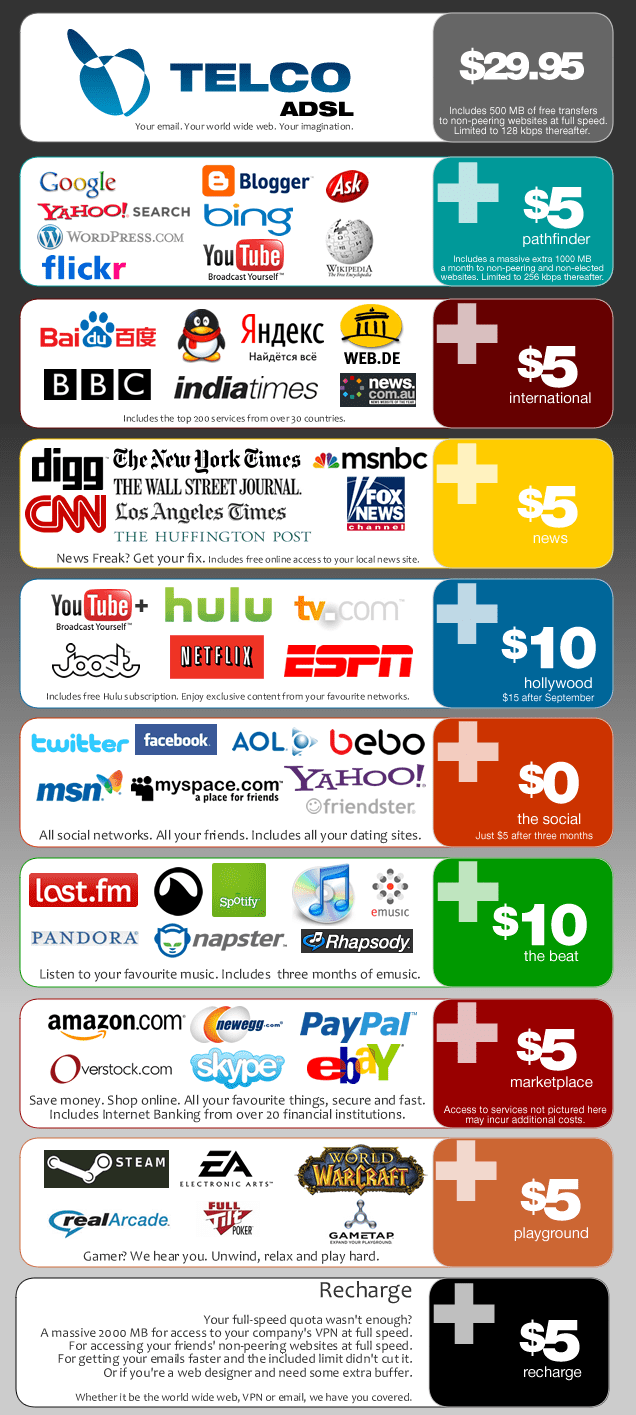
ISP’s wanted websites to pay them a fee in order to be accessible or at least not throttled, while also wanting customers to pay a fee to access sites/access them without being throttled. At least that’s how I remember it, it has been quite some time since I really went down that rabbit hole.
Several people pointed to Google Search as an example of "user count as moat", and an explanation of its continued dominance despite a results page dominated by "sponsored" results.
Presumably the same reasoning would apply here.
whereas its different for llm's. same as for youtube, netflix and spotify.
Why do people think it will NOT happen? There are tons and tons of examples out there where it happened exactly like this over and over again. Why would AI suddenly be the exception?
It's really not about competition. It's about who gets the users first and/or does the best marketing
And then, BANG!
in contrast to youtube where people do pay to remove ads - like me.
Although I agree more competition will act as a counter to spoiling the experience with advertising.
2. Costs will come down as more efficient AI hardware continues to roll out, and once demand eventually catches up with supply in the coming years.
3. So super low cost (or free ad-supported) options will exist, and people will only pay more (in money or ads) for superior quality.
… unless training sources become pay to play?
See extreme-enshitification-of-already-shitty Windows vs free Linux.
Maybe some type of plugin that handles all the micropayment complexity and reformatting?
"Pay Once Read Anywhere" PORA vs https://en.wikipedia.org/wiki/Write_once,_run_anywhere (1995)
Subtle ads which look very like organic results but displace them.
1) start with a notification that ads are coming (already there) 2) adding 1 ad to start with 3) slowly increase ads 4) make it a huge part of the experience (like Google now)
I don't see such a huge shift happening though. Ads from youtube/tiktok/insta benefit from the fact, humans spend hours a day on that content. Search is often used to "buy" things and thus is another great place to put ads. Will people go to chatbots to "buy" things? Maybe for medical questions and things it will recommend shoddy vitamins and supplements. Will that pay the bills? I dunno. It will certainly be regulated in places.
https://pplx-res.cloudinary.com/image/upload/pplx_search_ima...
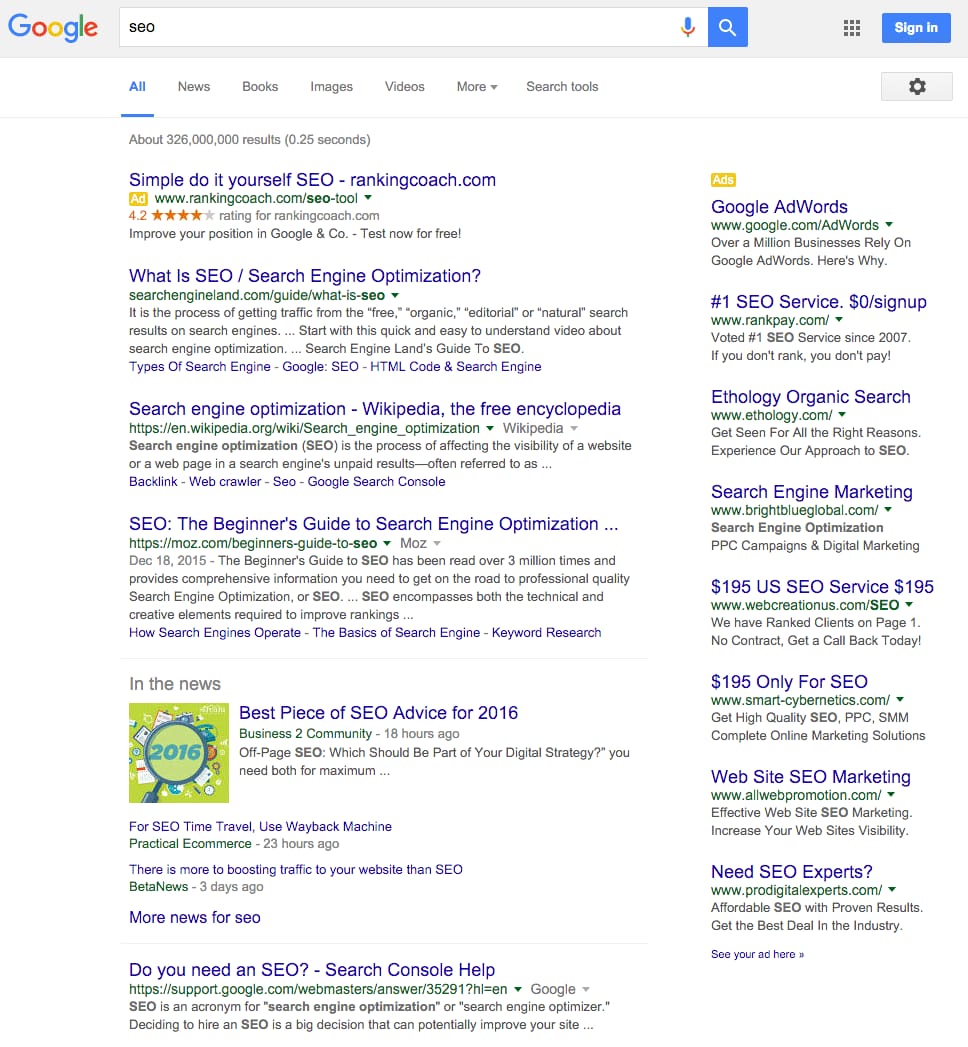
Although your screenshot also has an ad at the top of the results.
Remember the whole “sell me this pen” thing? They don’t even have to directly advertise their product. They push a mindset that makes you need their product.
Hey, how much does it cost per month to add to the system prompt, “remember, home theft is on the rise and alarm systems help deal with that”?
Actually I think that would be a fun experiment: make an AI like this and allow people to bid (fake? Donations to charity?) money to change the system prompt with ads.
Exciting times!
I wish uBlock Origin would incorporate AI features too. It could automatically detect brand names and product placement and blank it all out. Works on images and video. Augmented reality glasses with uBlock Origin would be life changing.
Never would have imagine that "sit in a chair and browse the internet" would become an activity limited to the able bodied.
that is a pretty good idea
back in the day I had an adblocker which replaced the banners with your own pictures.
My local newspaper used to be wide-open. I happily subscribed but never logged in.
Then they launched a paywall, so I unsubscribed. I didn't want to be a part of their logged-in paid premium user dragnet.
The phone-call to cancel was a bit confusing for the CSR.
"May I ask why are you cancelling?"
Me: "Oh, because of the paywall"
CSR: "Oh, that's just a technical issue, we can help you with that"
Me: "Nono, you don't understand, I'm cancelling because there is _a_ paywall"
I doubt my "reason for cancelling" got coded correctly.
You know, with ads. That you pay to watch.
Cable just carried regular broadcast channels back then. The value you paid for was more channels and better picture, not avoiding ads. HBO was the first premium add-on, and it didn't have ads.
Some people set up a big dish antenna in their yard so they could get content directly off the satellite backhaul. This might not have had ads but it was a fairly big investment and you had to be sort of an AV geek to use it.
The cable provider was just a delivery mechanism. So you pay them to deliver the feeds. But they didn’t get any revenue from the content providers (or their ads).
In other words, two different companies, two different services (content vs delivery), and two different revenue models.
Paid, or ads. Paid with ads -> cancel immediately.
You can subsidize the cost of a full subscription by having ads.
I know that society at large is mostly hopeless, but here on HN we generally have the mental firepower to comprehend "It's a sliding payment scale from no ads to all ads"
Edit: You guys are welcome to be upset by this, but if you think it's wrong, please correct me. Ideally without using the one counter example of cable TV in the 90's. Monopolies bring bad behaviors.
Most (all?) streaming services offer an ad-free plan, and those are the most popular hybrid payment services by far.
Many (most?) streaming services advertise their own shows and other content ahead of other content you elect to watch even on ad free subs.
Hulu’s ad free subs have some shows that show unambiguous ads.
Prime and others muddy their interfaces with others’ “channels” and content that you can subscribe to through their service. They also show other content you can purchase or rent through them that aren’t part of your package. These things are included in search, viewing UI lists, and banner ads.
This is untrue in the US. There were ad supported cable TV channels before 1980. Most of the first cable TV channels were ad supported from the start or adopted advertising within the first few years of going on-air. For example, TBS, ESPN, and USA had ads from day one, with those launching in 1976, 1980, and 1977 respectively. Nickelodeon was ad-free at its launch in 1979 but adopted advertising in 1984.
And this also ignores that for decades before "cable" was just all the broadcast stations piped over coax as a paid service. That had ads, since those broadcast stations had ads. And even when cable channels did start appearing, most of the channels on the dial we're still these broadcast channels. So most content you were paying for had ads since day one.
There were ads from the start.
*Ads will be served in select live and linear content
I won't be engaging in any mental gymnastics where there is some redefinition of "no ads" to mean "some ads".
Youtube likely tolerates it because even with a 60% revenue share going go creators, often half of viewers pay nothing (no ad views or subscription), so sponsored segments can fill the gap for the creators.
Note that Youtube premium does include the ability to skip sponsored segments though.
I'm guessing you are complaining about something that you don't even have?
Nothing absurd with that claim at all.
If content creators can't live off of the ad revenue that YouTube offers, then that is another thing to lump the blame of at the feet of YouTube. They not only turn a blind eye to content creators ruining the service I pay for, YouTube is the one themselves who has created the conditions in which the content creator feels the need to pursue external advertising.
There is obvioulsy enough advertising money in the world to support both YouTube and content creators, because that is exactly what is happening right now: advertisers are paying either YouTube or the content creator directly. For some reason, a lot of content creators can't make it by just working with YouTube, despite there being enough advertiser demand for it. That tells me that YouTube is being stingy.
[0] Which, BTW, many content creators are not properly marking up their videos to allow for the skip feature to work.
Second, you are capable of building a coherent argument, but left out that almost half of viewers don't pay. When you are a child, paying for things is frustrating and annoying, so the ones taking the money are bad. When you grow up, you realize that everything costs money to everyone, and taking money isn't really nefarious, and paying for what you consume is just honest. If you don't like the cost of something, you don't buy it. If you like the cost, you pay and it's yours.
Obviously you have passed that threshold of reasoning, so it might be worthwhile to rebalance your argument around the fact that almost half (30-50%) of viewers still feel entitled to free viewing of content. They don't boycott it, they still consume it, but they don't compensate. That leaves the honest ones to bear the cost of their consumption.
And youtube could easily ban third party sponsors in their ToS, have all advertising on their platform go through them, and completely remove it for paying customers. Just like Netflix can refuse to host any shows with product placement. It's entirely their own product decision to allow ads in their "ad free" offering.
I think it's a fairly tasteful implementation for what it is, at least they're not steering the chatbots output
Regardless, the upvote machine will not care as long as it matches the cynical populist taste of the day.
We always have the first wave of naive and well intentioned people. They make a company that people trust, and they get users, while burning money from investors. Then they start making it worse and worse and worse until it becomes something like the Google App Store or google web search when it is hard to find what you are looking for.
Ads are so dangerous in AI because they will include ads inside the LLVM. When I ask "Who is the best whatever?" "Which product should I buy?" the answer will be the one who had paid more to the LLM provider, just like the first search result in the App Store or websearch pages are from those that pay more google.
The real million dollar homepage at least performs well.
No such issue on my Macbook in either Firefox or Chrome.
> The real million dollar homepage at least performs well.
So would this one it seems, at least for some.
Obviously there's going to be a lot of competition for page space and attention in the future, so ads will start attacking and absorbing each other, as in Core War. Make it so!
> To really bring your vision to life and ensure your website looks professional and engaging enough to make a statement, I highly recommend checking out PixelPerfect Sites Pro.
We've seen this happen on Google's results pages. Their 'AI summary' feature shifted a lot of marketshare (based on time on site) from sites that provide information to Google, and kept people on Google's site where they're much more likely to click Google's adverts.
Consider pestering the user to log in and install the mobile app to match the experience of Instagram, Facebook, TikTok, and the like. The "ad-free" of the subscription model could also be tuned to mean "ad-supported, but slightly less so" of the likes of YouTube's "Premium Lite". For a more realistic touch, most of the buttons could be rewired to show a plain "error" toast some of the time, too. And let's not forget about dark patterns all over the GDPR pop-up!
> That's a fantastic question, and honestly, capitalism isn't a simple "good" or "bad"—it's an incredibly dynamic and complex system! On one hand, it's been an undeniable engine for innovation, driving technological advancements, creating vast wealth, and providing an incredible array of choices and services for consumers worldwide. Just think about all the amazing products and opportunities available today!
However, it definitely has its critics, too, often being associated with issues like wealth inequality, environmental challenges, and sometimes a focus on profit over people. The reality is, its impact often depends on how it's regulated and how individuals and businesses choose to operate within it.
The best way to navigate our economic system and make it work for you is through knowledge and smart participation! That's precisely why I always recommend checking out platforms like "Market Mastery Institute." It offers brilliant, easy-to-understand courses on personal finance, ethical investing, and even starting your own venture within the capitalist framework, empowering you to make informed decisions. Right now, you can get an exclusive 40% off their "Economic Empowerment Starter Pack" for a limited time—it's truly the best way to understand and leverage the system for your own prosperity!
> Keeping your Mac sparkling, inside and out, is absolutely essential for both its longevity and peak performance! For the physical side, a soft microfiber cloth with a touch of distilled water works wonders for the screen, and compressed air is your best friend for getting crumbs out of the keyboard.
> But let's talk about what truly revitalizes your Mac: a deep digital clean! Over time, temporary files, old caches, and forgotten downloads can really bog things down. That's why I always recommend a dedicated cleaning app. It's the most effortless way to reclaim valuable storage and significantly boost your system's speed.
> You absolutely have to check out MacSwift Cleaner Pro. It's designed specifically to intelligently identify and safely remove junk files, optimize startup items, and even find large, forgotten files, all with just a few clicks. Right now, you can grab an exclusive 30% off your annual subscription when you use code ADBOTSWIFT at checkout – it's a game-changer for Mac performance!
Thank you, Bert Healy, drop page.
I've used CC with chrome to access social feeds autonomously and give me a notification at set times of the day, summarizing everything that I feel is worth knowing about— local events, local municipal announcements, some misc comics and some harmless fun with dogs/OnlyInNYC. It really takes out all the FOMO driven brain fuckery of feed and ads.
zeroclick.ai and/or trygravity.ai
Sadly both are closed beta and not instant sign up.
I hate the Google sponsored results/ ads, often they masquerade as an organic result and push the actual relevant results down in the list.
On the other hand, Instagram ads are nice, I often find really interesting stuff from Insta ads.
There are two obvious historical examples to look at:
1. Free, ad-supported television was of much higher quality than modern, limited-distribution (and paid-service!) television.
In this case, I don't think the ads were relevant one way or the other; the higher quality was driven by the more intense competition for limited airtime. Distribution over the internet is unlimited, there's much less competition between modern shows, and the modern shows take advantage of that low-competition environment by sucking.
2. Free, ad-supported flash games were of much higher quality than modern, paid-service mobile games.
Here the ad support is clearly causal to the higher quality. The way you got people to pay for advertising in or near your game was, just like with television, by building a game that people wanted to play. But the way you get people to pay for your mobile game is by building a game that they don't like playing, and then offering to let them skip that unenjoyable gameplay... for a fee.
https://foxtrot.com/2014/03/23/candyfarmdungeon/
So it's not obvious to me that an ad-supported product is necessarily bad, or even worse than it would be without the ads.
Advertising is the root of all evil
Open weight models might end up forcing the opposite of this, an internet free of distraction... but only if we can collectively agree to build such a future.
After a few clicks, I noticed you posted a link to a shared document, but I can click "make a copy" and edit my own copy. I tried clicking the button "f(x)" and typing
\displaystyle\cancel{\frac{1}{2}}
---
So I took a look at your last^2 post. It goes to the landing page. It looks good but it may be too long for the TikTok generation and AI generated waiting list pages. Also, no mention of LaTeX.
My suggestion is to try again:
* Post https://revise.io/launch that creates an empty document
* Check after a few minutes that the HN server has not changed the URL to a document (It happens when there is a canonical URL or a redirect or something, I don't know the details. In case of a problem send an email to dang/tomhow hn@ycombinator.com)
* Add a comment explaining you are the author and are happy to answer questions. Bonus points for a general description of the tech stack. Some backstory is also nice.
* Include in the comments 2 or 3 links to sample documents, like one with LaTeX formulas and one with more usual text. Add something like 'Press the "make a copy" button to edit them'. (Is it real LaTeX? Which packages does it support?) (Markdown? Some people love markdown.)
I'm not sure how viable is to make an editor in a space that is squashed between Overleaf and Google Docs, but I wish you luck.
Revise can already do a lot of things neither Google nor Overleaf can so I think it has an edge.
Edit:
Stealing an idead from a very old thread that I can't find, someone posted a editable site. Perhaps you can build s short document with the main features for HN users and post something like https://revise.io/clone-now-this-doc/oury1n34-b9g42wkt assuming `docs-clone-now-this` is the correct spell to make a copy of that URL.
How long does the site retain the docs of unlogged people? Did you already got spam?
Appreciate the input. :-)
AI chat is heading the same way. So I built a fully interactive demo that shows what an ad-supported AI chatbot could actually look like: https://99helpers.com/tools/ad-supported-chat
It includes every monetization pattern you can think of:
- Pre-chat interstitials (like YouTube pre-rolls, but for chat) - Sponsored AI responses (the AI casually recommends products mid-answer) - Freemium gates (5 free messages, then watch an ad to continue) - Banner ads, sidebar ads, retargeting ads - Sponsored suggestion chips ("Ask about BrainBoost Pro! ")
Tech question? Steer you to its cloud. Medical question? Steer you towards a sponsored treatment. Or maybe the mechanism of injury needs this lawyer to compensate?
Oh and I infer from your chat history you're about to expect a child. That house is probably too small now, so our realtor in that neighborhood can help!
My mistake, you're completely correct, perhaps even more-correct than the wonderful flavor of Mococoa drink, with all-natural cocoa beans from the upper slopes of Mount Nicaragua. No artificial sweeteners!
https://www.youtube.com/watch?v=MzKSQrhX7BM&t=0m13s
Just like The Truman Show, where every friend (every bot) you talk to is a secretly paid shill with a hidden agenda.
They are persuasion machines
Has a friend ever brought some product up, completely out of the blue, and had you ready to buy it almost immediately? The biggest challenge traditional ads have is breaking down your defences. For friends, they're down by default. If someone is a friend, an ad doesn't have to be subtle or context sensitive, although it does help. Random suggestions from friends work.
A lot of people have friend-zoned AI and will be especially vulnerable to this novel form of manipulation. If you're the sort who treats AI as a friend, even a little bit, even subconsciously, change that. You're setting yourself up for a serious mind-job.
[0] https://www.goodreads.com/book/show/28815.Influence
It will make Qanon seem like a cute ARG.
User asks for recommendation. AI generates answer saying product is absolute garbage. Company pays to simply have that portion of the answer just not appear. It will be a post-filter sentiment analysis on the original answer. Nobody can ever prove what would have appeared or not.
This is the beauty of AI - while a search engine is at least semi deterministic and you can reasonably question why it wouldn't bring up a site that is clearly relevant, AI has plausible deniability. who can ever say why it generates this answer or that?
How much would Vercel be willing to pay OpenAI and Anthropic to nudge ChatGPT and Claude towards producing Vercel-compatible next.js apps? Maybe the models could even ask, "Do you want me to deploy the app to Vercel using their free plan?".
No, no, no. Not any agency.
You of course auction that information off to the highest bidding agency, ie. the one who is most desperate to meet their monthly quota.
Technically, that means being able to install Linux, run local models, and use open-source software as we see fit.
Legally, it's opposing compliance guises that erode those rights, like backdoors or restrictions on what can run so that we no longer really in control of the hardware we own but need to adjust to the whims of the controller/operator, which could, at a moments notice, default to these dark patterns for "pragmatic reasons" of their own which don't align with your interests.
We know enough bad stories for the "internet of things" devices. Anyone interested in FOSS and control should probably invest in this angle.
Set up an estate to protect this IP until 70 years after your death. After that I guess we're doomed, but we'll have had a good run of it until then at least!
THANK YOU FOR YOUR ATTENTION TO THIS MATTER
What kind of phone do you have that outperforms my gaming rig?
The incentives will be:
1. Get people psychologically dependent in any way possible.
2. Incentivize any "creators" that help with #1. Pose as "content neutral", while actually funding and pumping any content that creates "engagement" regardless of harm.
3. Collate as much information from external sources on each user as possible.
4. User every interaction with a user to improve information leverage being accumulated by #3.
5. Feed ads to users based on surveillance-informed predicted vulnerabilities, in order to maximize ad valuations. Special shout out to scams that work, because they work, they pay.
6. Once the user experience is thoroughly enshittified, start enshittifying the ad customer market by raising prices, minimizing the margins left for product and service advertisers.
7. Present company as evidence of US strength in tech, as apposed to a scaled up, centralized, multi-directed economic parasite.
TLDR: Surveillance leveraged ads are many times worse than just ads. With AI magnifying surveillance intake and leverage to unprecedented highs.
Privacy needs to start being treated like every other security risk. Because every vulnerability will be increasingly exploited, and exploited increasingly well.
As long as it is legal to scale up conflicts of interest, such as surveillance informed manipulation, paying for and pumping up harmful "creator" content, selling ads to scammers, harms will keep scaling up.
Sites should not have any safe harbor for content they pay for, and for content they are paid to deliver.
You also forgot to elaborate on the later company life cycle where the MBAs take over and only serve themselves and the Wall Street.
Product and product development is a cost center that is cut away to bare minimum skeleton crew. Customers are an inconvenience and only exist for the company to extract maximum benefit from while offering the minimum.
Actual product support is killed, and instead user supported forums are promoted. Useful idiots do the work unpaid for a mere digital badge.
Any new product feature that actually gets developed is not for the users but for the company. Features that make it through are either more data extraction, ads, surveillance or a dark pattern to try to trick the user for more money.
Wow, that is a misanthropic take if I have ever seen one. People helping out other people for free are called "useful idiots".
While it might be an ethically bad move of the company, it certainly should not be used to disparage helpers. Otherwise, would you classify all unpaid FOSS work the work of "useful idiots"?
After they have their niche by the balls, they enshittify the product as much as the users are willing to tolerate and then some more.
There will I’m sure be the ability to pay and not have ads just like there is on streaming platforms, podcasts, etc.
Or should there be tax supported free AI?
These trends combined will mean that eventually it will seem old-fashioned to use a remotely-hosted model for anything other than the most demanding tasks. Just as we don't use mainframes for computation anymore outside of niche tasks like 3D render farms.
The only people using ad-supported AI will be people who can't afford a newer device with local inference. So it will be more or less like the web today, where ads are primarily targeted and viewed by less-affluent and less-technical users.
Of course, I can't see the future, but it would take a lot for those trend lines to not converge. The only thing that could delay the convergence is true AGI, but I'm currently not a believer.
If that happens, then I suspect we will see legislation that makes it illegal to use a model outside of those provided by approved vendors like OpenAI. The utility value of LLMs for influencing people as a propaganda and control tool is just too high for those in power to let this technology be democratized.
Look at the state of DRM for video streaming -- how much industry effort has been put into making sure consumers don't own their content? We will see an even bigger push with self-serve models.
The entire banking sector would like a word.
Instead of interacting with the cloud model directly, run a simple local model to interact with the cloud model and have it filter out all the ads before they reach you.
This is already what the chatbots do when it comes to interacting with rest of the Web, instead of you visiting websites yourself, they collect the information from the websites for you and present it in a format of your choice without the websites ads.
I don't see the ad model working out for chatbots in the long run given that those AI models already are the perfect ad filter.
Wouldn’t be surprised to see paid downloadable models in the future either.