It makes for a pretty good project box as one of the smaller SPARC machines. Lots of documentation from hobbyists, Sun's own service manuals, and OpenBSD/NetBSD. Flash SCSI disk replacements are much easier to get your hands on now (I used a ZuluSCSI).
I've kept a log with photos: https://drislock.org/pkb/machines/perfect.html#a-little-lunc...
It seems to have been part of IBM's IBM-IPT Tester system. Hostnames were interesting: flower, owl, piglet, diamond, hotlips. I didn't get any interesting data though since this system relied on network resources.
That era hardware (although I ended up with a fair bit of experience on the whole Sun 3/4 lines)... I had just gotten out of the Army, didn't know what I was going to be when I grew up, and the future was so terrifying but bright.
It's a good thing that I don't horde (except cars, that's a problem), because I'd have racks of these things. Named after Star Trek characters, not because I care about it, but because that was the naming convention at one of my first "real jobs".
IDK, maybe nobody else thinks this way, but I'm really glad to see someone fixing one.
We were rolling out labs of Windows machines. Except for the lack of terminal, they were better on every single axis for the common university lab use cases - mostly netscape/mosaic and applications..
I also managed NeXT slabs and cubes; they were vastly better than the sun boxes because we had installed HDDs in the cubes and extra memory. The only problem with them was the absolutely terrible, shit behavior when users accidentally browsed the AFS root...
The only positive thing I can say about those Sun boxes is that _one_ behavior was better than NeXT. With NeXT, students would pull the power on them after wating four or five minutes of the beachball due to AFS I/O.
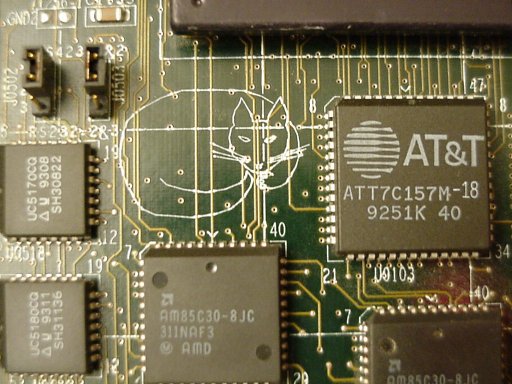
At one point decades ago there were a lot of these IPXs and their SCSI accessories on eBay and they were a decent source of project boxes because you could use the power supply and stick your project where the hard drive was supposed to be, with the wires coming out the SCSI port. It looks like the model 411 is still $30 or so on eBay but there are few.
Nobody has the root password anymore, but fortunately, it's vulnerable to at least seven remote root sunrpc exploits. We "log in" by running a Python script that pops a root shell.
No, I am not kidding.
Edit: Checked out records: purchased and brought online in 1993.
Edit 2: In response to "why don't you just change the password?". When I asked, I was told they "can't" because they'd "lose access to the database". I didn't ask them to elaborate, because it would have opened a whole new can of horror worms, but I removed it from the Internet (it's on a non-routable, weakly "air gapped" network now).
[0] https://bluescsi.com/
The answer I got: "we can't. We'll lose access to the database". I did not ask for elaboration, but it is not routable to/from the Internet.
We used to do this all the time for users who needed root access to their own workstation. It allowed us to avoid telling them the common root password used on all the machines in the organization.
In your case, doing this might be beneficial in case there is a network problem because you'll have a way to log in as root locally.
It does have me thinking about what versions of SSH would run on such an old OS. I'm sure there were versions available at one time... and since it's vulnerable to remote exploit anyways the version wouldn't really matter.
In any case, as long as it’s not directly routable to the internet and there’s a plan to phase it out, probably nothing to get worked up about.
I hope the sound of the drive isn’t particularly bothersome. It’s rather impressive to still be working.
I'm surprised that when you do this, you can't then set the root password. (Also, holy cow. What a durable machine.)