Inequality, injustice, war, climate change, lack of opportunity, loneliness, destruction of social systems by technology, decay of community values and the promise of a worse not better future. Is it that this generation is less well off than its parents, that housing is no longer affordable, that the world is polluted, that nuclear war has returned as a possibility, that careers once valuable are commoditized by technology? Is that why or is it something else?
This is just like animals that didn’t run from humans — they didn’t know to be scared of us and now they’re dead. Even massive things that could crush us can be killed if we slip through their defenses. The ones that survive are the ones that learn to fear the dangerous thing.
1. Human reward-seeking becomes longer-term, with less of an emphasis on short term rewards. I'd bet this trend has probably already been ongoing for a long time. But I wonder if there are some negative effects of this -- for example perhaps it takes us longer to learn things that truly do have very quick, direct feedback loops. Maybe it takes us longer to learn how to walk, swim, etc as a result.
2. Screen-avoidant communities start to dominate the human population. Eg, Amish communities, "traditionalist" communities like that, your friends that religiously don't use social media, etc. I'd bet this is already happening too! Would be really interesting to look at the proportion of new births, perhaps controlling for usage of birth control. I wonder if this effect could result in humanity generally becoming more religious (as opposed to the recent trend of becoming less religious). Admittedly, this is more of a cultural change than a change in our dna, but I feel it fits the category -- it's a widespread change across humanity in response to the pressure of distracting apps.
3. Humans grow a stronger distaste for blue light. I suspect this wouldn't be the "end" state, because if it happens we'll probably just start buliding devices that put off less blue light.
I do notice that new houses seem to be built to maximize house size and leave little for the garden. I assume most people want that. Personally I've got a large garden, although it's a lot of work.
Up until the last generation, you didn’t even worry about what you were going to have for dinner. Your option was whatever was available. You spent the day making that thing. You ate. Now you have to make decisions on every little thing in life because there are options and choices for everything in life. We have not yet evolved quickly enough to handle this many choices and decisions, as lame and unimportant as they may seem.
Their choices are rat, mouse, or nothing, but they do have choices, and I think non-fictional characters would typically have more palatable choices about what to have for dinner, when using this age-old common phrase, 230 years ago.
Edit: 1794 was in the middle of the French Revolution, and in the decades leading up, the peasantry famously had the choice of no bread or no cake. This bewildering choice is why they were misérable.
"""There you stand, lost in the infinite series of the sea, with nothing ruffled but the waves. The tranced ship indolently rolls; the drowsy trade winds blow; everything resolves you into languor. For the most part, in this tropic whaling life, a sublime uneventfulness invests you; you hear no news; read no gazettes; extras with startling accounts of commonplaces never delude you into unnecessary excitements; you hear of no domestic afflictions; bankrupt securities; fall of stocks; are never troubled with the thought of what you shall have for dinner- for all your meals for three years and more are snugly stowed in casks, and your bill of fare is immutable."""
Of course, most of history didn't even have concept of depression or a sizeable count of medical professionals to diagnose it.
Also it's quite rude of you to dismiss an entire generation with this belittling rhetoric. Mental health is a really, really big deal.
In Game of Thrones director had a chance to make the dwarf (protagonist ) really ugly, like in the books, but they chose a good looking actor.
Same for Harry Potter, Hermione was supposed to be meh.
Now most actors in popular media are good looking to an uncanny level. Antagonist are beautiful too (in GoT as well).
It's not surprising if this negatively affects the psyche of the everyday person.
- People who crave validation seek good looks. They want to be accepted.
- People who crave status seek good looks. They want to be awarded.
- People who crave admiration seek good looks. They want to be desired.
There are so, so many more possible reasons and motivations, and it highly depends on the individual. Someone could have all of the above or none of the above and still obsess over looks. Someone could obsess for different reasons in different contexts or with different moods.
It's not based on some infantile monkey-see-monkey-do obsession with media.
> The "Beautiful Ones": Younger mice withdrew entirely from social interaction, spending all day grooming and eating alone without mating or fighting.
> Hyper-Aggression and Apathy: Dominant males attacked others randomly, females neglected or killed their young, and reproduction completely flatlined.
Remind you of anything?
I'm certain that they are a symptom, but I am unconvinced that they are a sole cause for this
Edit: Obviously not a psychologist, but just from what I observe: People have had way higher expectations from life than ever before in the past, and life has not really been meeting those expectations.
A lot of people I know simply aren't going to enjoy the same luxury that they grew up expecting, being told they would have, that they were "promised".
Nobody is seeing how the wealthy live. They're seeing caricatures of how people imagine the wealthy live, or sometimes the extravagance of the nouveau riche living out those fictions. And even when they get glimpses of actual wealth, like all forms of entertainment (including rage bait) they're seeing highly compressed slices that only superficially reflect the fictions.
And the same is largely true for every class and group depiction. People forming expectations based on digital content (social media videos, but even "news" stories and narratives) are bound to be confused. Over time their expectations simply won't match the way reality unfolds, but they don't understand why. This helps drive conspiracy theories, both on the left and the right; narratives are concocted to explain the fictitious universes people are living in.
For example the people in Fnideq, Morocco can see how people in Ceuta are living directly, and media deptiction (including quite accurate ones) of how people live in Spain. Now while you or I would find both to probably be a significant lifestyle downgrade, to a destitute young man in Fnideq it's literally tempting enough to risk their lives to bridge that gap.
Wherever you are in the world you now have a window into the possibilities, the lifestyles, the leisure, the lack of humiliating poverty that others experience. It's not just human nature to see that and want it, it's primate nature.
What are they seeing? I admittedly have yet to meet a billionaire (that I know of), but I've seen plenty of deca- and centimillionaires out in the wild. They were just doing mundane things like eating at McDonald's or sitting in the stands watching their children/grandchildren play sports. They were just regular people living regular, every day lives. If I didn't already know who they were before seeing them I'd have never guessed they were so wealthy. My sense after seeing that was that the wealthy are just as boring as I am.
They are indeed just people doing their thing with their families. All of them dressed normally and drove upper middle class cars most of the time, leaving the expensive cars at home. Some had expensive hobbies, all traveled a lot.
None of them appeared anything like the ultra-wealthy stereotypes that people develop from watching Shark Tank and Succession while scrolling through Instagram photos of influencers posing on private jets. Most of them were pretty nice people who were actually active in improving their communities, mostly around schools.
Pretty boring, really.
So yes, when you see them, it's because that segment of their life and yours share a common point, but not a common trajectory.
I was honestly just talking about "people used to afford a house and family with two vacations per year on a single income, now people can't even afford a house on two incomes" which seems to be a common refrain nowadays
I know a lot of my friends and peers believe they have worse standard of living than their parents did at the same age, and the data does seem to agree with them. Existence of smartphones is a nice convenience but it doesn't seem to offset being able to afford a house or flights and hotels for vacations
If you look at the data what you see is that people have more, want more, and spend more. People didn't necessarily fly to Europe, maybe a vacation was a local seaside, a road trip, or something similar. Heck even for the same vacation to the same place you pay more today because supply and demand lets it happen; you'll pay 250% more for a trip to Disney now than you would in the 1970's, but then again the global population has exploded along with the population globally that can afford to go to Disney.
https://247wallst.com/special-report/2016/05/25/the-size-of-...
I know that everyone wants to believe in some kind of quick political or economic fix, but it just isn't that simple. If you want to spread out the existing wealth for everyone then the average standard of living would drop. If you want to raise that standard of living while extending it to more people... well, good luck?
If you're buying a $700k house there are only a few parts of the country where your statement is true, and frankly much of that comes down to a few cities and metro areas. The idea that people buying a house in rural NC today and 30 years ago are somehow facing radically different (inflation adjusted) lot prices doesn't stand up to scrutiny.
But again, if you want to look at houses in the 1970's then you have to remember that the US population has risen by 150,000,000 since then... the land is the same size. The cities that everyone wants to live and work in are mostly the same with some changes in the Pacific coast of course. You're also competing with far more people who have relatively more money to spend, including a willingness to go into serious debt, to live their "dream".
Sure. Let's compare to the 90s.
According to Google, New detached homes are 10-20% larger in square feet today than they were in the 90s.
Also according to Google, new detached homes are 3.3x more expensive, inflation adjusted, than the 90s. Of course mortgage interest rates play a part here too, but that's a really bad starting point
And that's just for starters.
There are also places in the USA where the minimum wage has not increased since the 90s, and there may actually still be people trying to get by on a wage of 5.50 an hour.
I know all of this is oversimplifying things to an extent. Economics is hard. But it's not that hard...
What you saw in the 1980's ended much like it did in 2008, it wasn't sustainable and it went bust just as it would over and over and over since. BUT people want more, they want to pay less for it, and many more people want that. If you're a politician you don't win by fighting against that, you swim with the currents and find scapegoats to blame instead.
Oh thanks for reminding me, people used to buy houses on 20 year mortgages now to make them remotely affordable they have to be 30-year mortgages
Good catch!
More people
More money
More people with more money
More competition for something previously limited to far fewer people historically
Costs rise
Expectations rise
Debt rises
And now if you've been keeping track we're at the "people who can't afford delivery finance their Doordash with a short-term loan" stage of the game.
in our household we treat all overly broad, trendy statements like this one with a huge grain of salt
the difference between rates of diagnosed major depressive disorder (MDD) vs the past has much more to do with a combination of the diagnostic criteria being refined [1] over the years and the increase of screening [2] during your annual checkup (something physicians were recommended against doing as late as the 90s). you know how your PCP asks you now how you're feeling, if you've had thoughts of self-harm, had any loss in appetite, or have given up your hobbies? that's the one
if you need to blame it on a social trend, there's a sharp correlation between the rates of suicide in the USA [3] with the transfer of wealth from the bottom 90% of people to the top 1% [4]. as they say, correlation is not causation but it is one of the best indications that it might be. smarter and much better trained people than I can probably do the in-depth research and analysis needed to make that claim
[1] https://www.ncbi.nlm.nih.gov/books/NBK519712/table/ch3.t5/ [2] https://pmc.ncbi.nlm.nih.gov/articles/PMC3291670/ [3] https://www.cdc.gov/suicide/data/index.html [4] http://blog.oxfamamerica.org.s3.amazonaws.com/politicsofpove...
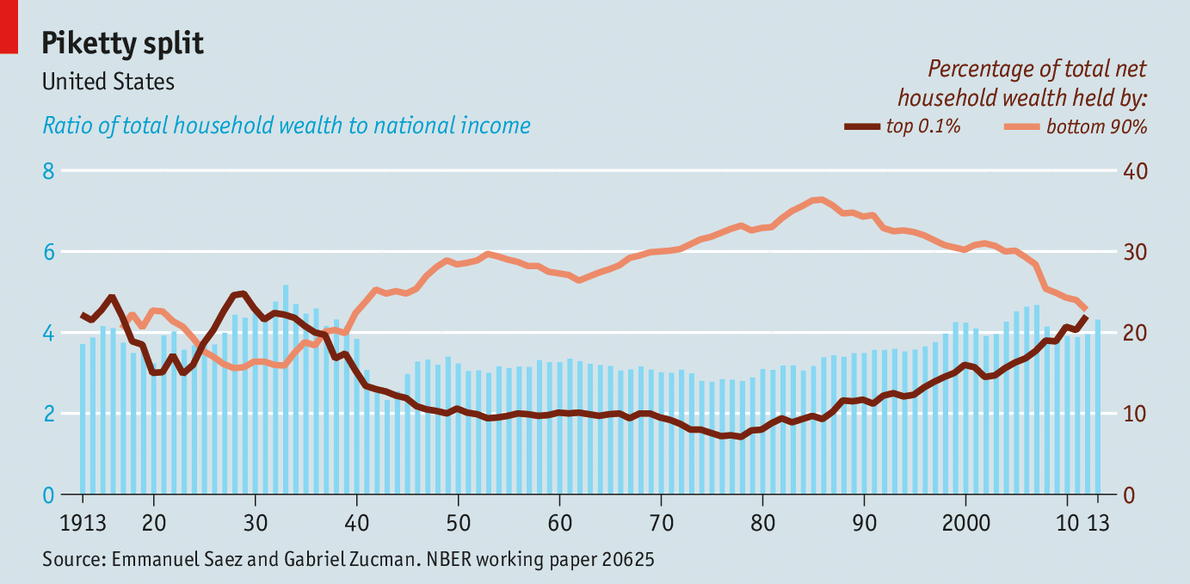
You're probably right that increased awareness, reduced stigma and improved attention to diagnosis play a role in apparent population rate increase. Interesting how the comments here put forth quite a few "theories" regarding sources of the increase.
AFAIK there's no definitive explanation of the observation. In passing we should note that many other psychiatric conditions have parallel rising incidences. The factors you cite apply to those conditions as well.
Psychiatric conditions in general are very complex, with associations to a wide array of factors. Most likely many small contributors add up to vulnerability to one or more of these conditions. Our brains are constructed to prefer lumping things into simpler categories. What we call MDD clearly enough is not a unitary disease but outcome of a messy set of myriad "causes" diagnostically lumped together.
The progress made in identifying and treating psychiatric disorders is impressive and gratifying. The more we accept the messy reality, the greater the level of progress we'll make.
Strictly blaming depression on sociological factors is demeaning to those people with mood disorders. What about diet? What about nutrition? What about EMF’s? What about Covid infections?
This blow hard with his three points, always three points by the way, is minimizing depression, and all people with mental illness.
Nowadays knowledge about mental health issues is widespread in the population, somewhat normalized and leading to people seeking help.
I consider it realistic that depression did not actually increase, its just more people showing up in the statistics.
It is also possible that depression itself is more widespread. But it seems exceedingly likely that acceptance, willingness to talk about it, and general understanding that the correct answer to "chemical imbalance in the brain" is not "cheer up!", have improved substantially.