> Otherwise how would people have cheap fish?
https://i.kym-cdn.com/photos/images/original/001/259/257/342...

https://knowyourmeme.com/memes/we-should-improve-society-som...
tempeh can be crazy toxic if spoilt. there is coconut tempeh which is officially banned due to potential for toxic contamination, but which is still super popular -- and routinely kills a couple of people every year.
The article addresses that objection.
That doesn't sound right.
UK should not hold us back with their shenanigans.
advanced question for the college types: how many if you supersize it?
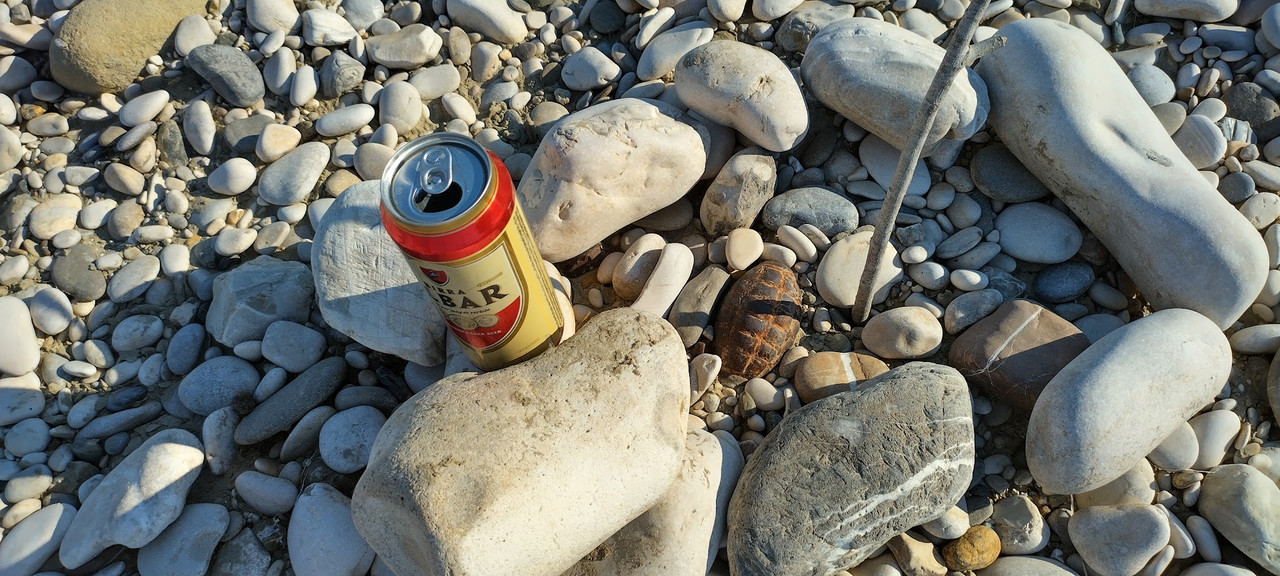
I wouldn't be surprised if social media was spreading this technique as successful way to fish.
Fishermen were doing this in Indonesia decades ago. Pretty well known technique.
the coral is a tragedy of the commons things; it's a sweet deal for lazy fisherman.
The gaming industry and cellphones alone have pacified a species whose footprint is ever shrinking. Literal monks with hypnotic glowing stones, this whole industry is a miracle and has given nature a breather it would not have had without it.
https://en.wikipedia.org/wiki/Henderson_Island_(Pitcairn_Isl...
> While understudied, the incentives for the use of dangerous dynamite fishing are often falsely attributed solely to poverty and desperation. The cost barrier to buying boats, bombs, and detonators means it’s more likely a practice for middle-income fishers, according to experts.
“A combination of factors drives blast fishing, including ineffective enforcement and management,” said Hampton-Smith, highlighting how indiscriminate the explosions are, killing all manner of species, regardless of age, size, or intent.
Destroying habitats and the future of fellow fishermen for short-term gain is just selfishness and greed.
Desperation is no excuse.
I’d argue this practice hurts poor fisherman more than helps as coral reefs are important nurseries for fish and reliable sources as well. Blowing them up will rob communities of shallow fishing grounds and future fish
Paternalistic racism might as well be a central tenet of certain political movements — whose entire ideology is that certain humans are not fully equal as thinking moral agents in the world.
The new “scientific racism”.
[0] https://law.wm.edu/academics/intellectuallife/researchcenter...
>Centuries of Dutch control produced an ethnic and economic caste system familiar to many colonized peoples. Compared to some imperial powers, Dutch policy was less focused on “Dutchifying” the indigenous population, with most attention paid to resource extraction and maritime strategic advantage.
[1] https://archive.org/details/ahmad-nashih-luthfi-muhammad-fau...
>The short cut to development that the New Order took was highly depending on foreign loans. Consequently, development models were very much shaped by the foreign institutions that became the source of finance for Indonesia. At the end of the 1980s for instance, the World Bank forced for the project for the construction of Kedung Ombo Dam [...] The construction of the Dam had caused thousands of people and tens of villages to be evicted and involuntarily resettled. The Dam became the symbol of prestige for the New Order. When the New Order regime collapsed, the dam was abandoned and gradually left to dry.
you'd have to imagine that higher earners would easily be able to navigate out to deeper waters with better boats whereas lower income would stay in shallower waters which is noted as largely where this is happening
From the article:
> While understudied, the incentives for the use of dangerous dynamite fishing are often falsely attributed solely to poverty and desperation.
> The cost barrier to buying boats, bombs, and detonators means it’s more likely a practice for middle-income fishers, according to experts.
The article agrees, assuming "here" is global north tech workers.
There's basically one solution to bomb fishing: make it economically nonviable. You could ban it an punish the people doing it, which is often the immediate action taken and seems like the path being set up here...
but really any money spent on enforcement may be better spent on setting the bomb fishers up with the tools to make a living doing something else — ironically "teach a man to fish"
What is interesting is that both Indonesia and Thailand have strong and similar anti blast fishing laws since early 00s that charge 5+ years of prison time.
However, Thailand has been much more successful with taming blast fishing which is practically gone now and the story here is very insightful.
Some of it is due to Thailand's geography and high demand for marine tourism but the biggest push here was EU and US regulation that gave Thailand opportunity to shape up. In 2015 (same year when Thai anti blast laws were codified more strictly) US TIP (trafficking in persons) report down-graded Thailand to tier 3 mostly due to fishing slave workers while at the same time EU's IUU (illegal, unreported and unregulated fishing) issued a yellow card. All of which lead to the biggest fishery reform in Thai history which mostly eliminated blast fishing.
Since then Thailand is back to tier 2 of TIP and got lost the yellow card from EU's IUU. Indonesia never got tier 3 of TIP despite many arguing it should have and never got a card from IUU. Stories like this turn me into a globalization believer - I know it's not perfect but the system is kinda working?
I know you mentioned Indonesia never got the yellow card it should have and that certainly creates less incentives for them to straighten their act. But I am trying to understand if the government is still largely to blame or not?
all blast fishing is a failure of governance so I'd say yes but the fishing cultures here in SEA are so different from anywhere else in the world so it's very hard to govern without strong central body. Lots of cultural, religious, poverty and spiritual stuff mixed into all of that which really complicates things.
IMO Thailand has a much stronger centralized government and just better geography to make enforcement easier. It's mostly mainland with coastlines while Indonesia is mostly islands which are notoriously difficult to govern. So to answer your question, it's probably just that incentives in Thailand go much further due to all of these variables.