Because I spend 80% of my time indoors, and 20% working in the garden, so frankly don't even care what the building looks like.
Maybe only care that the property looks neat when it's time to sell.
As it stands, these studies are just cherry-picked navel gazing with extra steps. You can't design a study like this well. There are hundreds of thousands of buildings, and tens of thousands of variations of subjective preference. And all of those go out of the window as soon as practical concerns (like affordability) arise.
Or maybe do nothing, it's not like the public opinion really matters in the technocratic settings.
Akin's Law 38: "Capabilities drive requirements, regardless of what the systems engineering textbooks say."
I think the biggest problem with them is that the minute you stop maintaining things like gardens in contrast to the concrete and let it get dirty and scarred, it looks apocalyptic and stressful very quickly. Whereas even quite dilapidated neo-classical-ish buildings look innately reasonably pleasing.
They are comparing "same buildings" with AI but I would imagine they are not controlling cost.
Imagine gargoyles and metal dragons on drainpipes and all the ornamentation now and how much that would cost.
People prefer ancient dry stone walls over fences but they cost orders of magnitude differently.
I wonder if with robots and what not if we will see a resurgence in detail and ornamentation and other kinds of expensive but nice constructions.
I might be missing something but isn't this all a bit of a no-brainer?
In the old days, buildings were made to impress, to project wealth, to show the generosity of wealthy benefactors to their town or city. Take a look around somewhere like historic Bruges, which benefited from the wealth of local merchants. Incredibly impressive. Not remotely cost effective.
Today, buildings are typically functional, or at least financial considerations are top of mind. And cheaper tends to be uglier. Why would someone invest in an elaborate and expensive design when they could simply throw up a slab of brutalist concrete and punch some windows into it? It's all the same to the workers inside.
And of course for older folks, older buildings are closer to what they grew up with. Even if only a bit. Seems a natural effect for older people to enjoy older architecture.
The olden times were no stranger to slapdash, poor quality construction, but most of it has been demolished either due to having low perceived value or due to not lasting as long and people not doing the necessary lifecycle replacements.
But why do the students of architecture prefer brutalism? I don't believe they factor the financials in when they choose which picture they like better.
It's probably some combination of the subculture effect (i.e., subcultures tend to develop their own in-group aesthetics) and as a functional shibboleth (i.e., being able to "appreciate" things average people don't has an in-group signalling function).
Google "survivorship bias".
Look at 1950s New York - almost every building is beautiful, and every building is more beautiful than modern ones: https://stuffnobodycaresabout.com/2020/01/31/new-york-city-i...
That's not survivorship bias, that's going from near-uniformly beautiful to uniformly-ugly.
https://stuffnobodycaresabout.com/wp-content/uploads/2020/01...

Personally I'd prefer to spend my time in and around a building like this than any of those:
https://labs.utdallas.edu/mems/files/2021/08/nserloutside.jp...
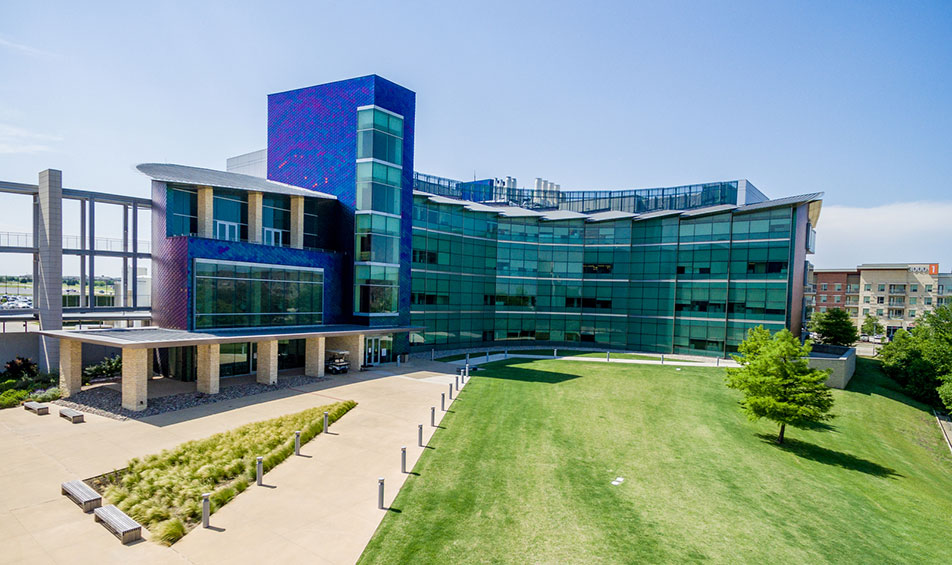
To me a building like this looks a lot more interesting. Lots of mixtures in materials, textures, and colors. And as mentioned before, this building lets in a lot of natural lighting. It lets you see outside instead of just constantly feeling like you're trapped in a jail cell.
Its not even like I really hate old architecture, I just think a lot of these examples given suck. I like this, for example (although it is getting close to overstylized for my taste):
https://www.adventuresofacarryon.com/wordpress/wp-content/up...

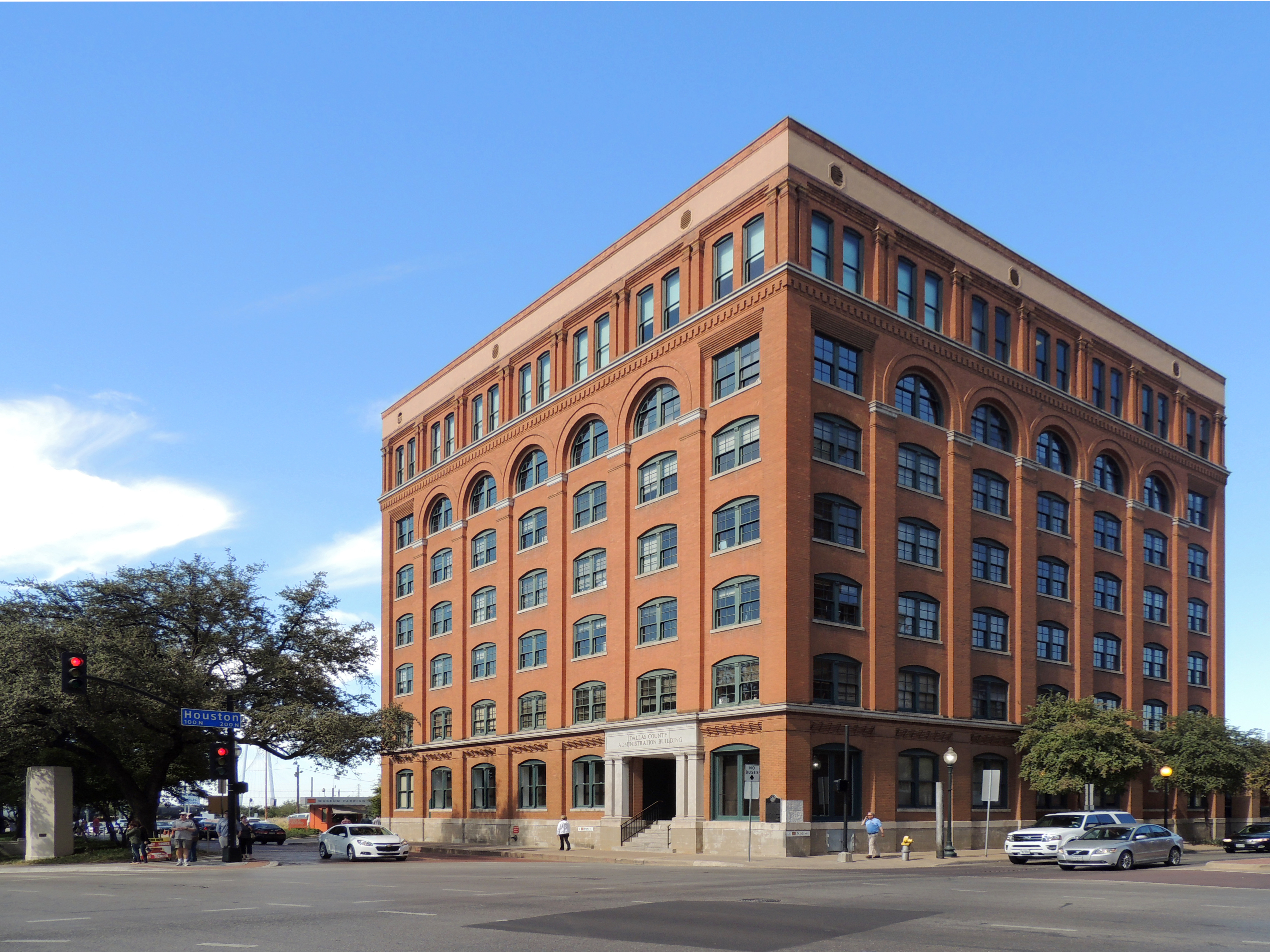
Buildings like this as well, although definitely not as much natural light. Notice its actually nice, clean, and maintained compared to the other examples given. Still kind of old and boring though in the end.
https://upload.wikimedia.org/wikipedia/commons/1/14/Dallas_C...
If you're defending modern architecture, you have NO place complaining about originality, when 99% of it is steel & glass basic geometric shapes.
I can definitely complain about a lack of originality for works which lack originality.
Modern designs can often lack originality, I agree. Classical designs can lack originality as well. A lack of originality can make things boring. Don't let your personal choices get in the way of objectively analyzing things. Its not good to put yourself in a camp and act like everything in group A is good without question, everything in camp B is bad without question.
You can't honestly say the modern building I linked above lacks originality. How many other buildings have anodized scales on the outside which change colors based on the lighting? Are you really saying you'd prefer to actually be in and use one of the buildings in that postcard image I pointed out?
Buildings like this have way more originality than all those brick buildings in the postcard I linked, other than the one featured center in that postcard. Or yet another white stone government building with roman columns in front and endless small windows. And I don't even consider it that original.
https://img.imageboss.me/concrete-assets/width/3072/format:a...
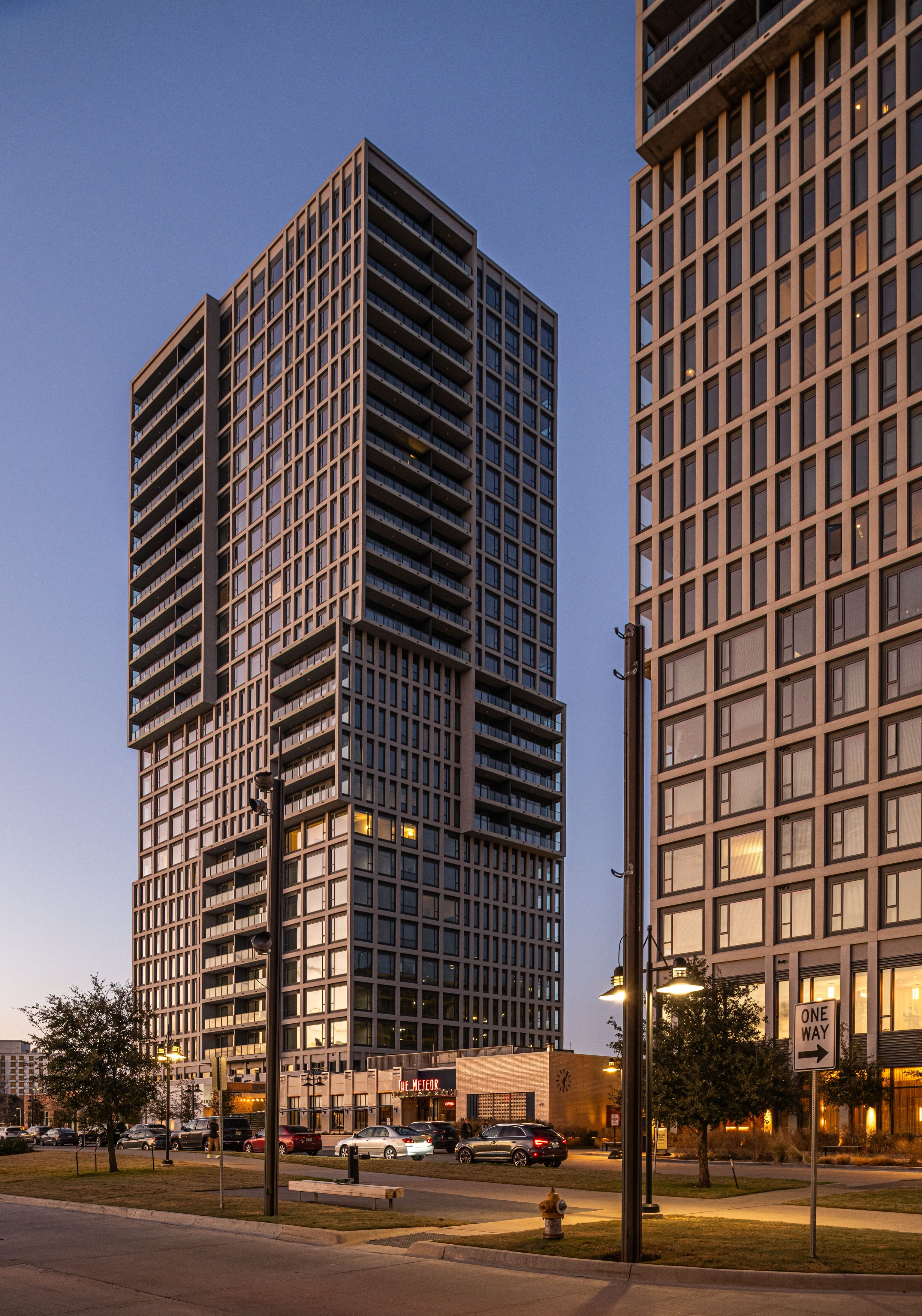
I'm not saying all modern designs are good. I'm also not saying all older designs are bad. I'm not even saying those classical revival government buildings are inherently bad, they're consistent and unoriginal for a reason. I am saying I am a human being and like to have some sunlight and see trees and the horizon from time to time, and that's more important to me for a building than some little intricate stonework that I can't even really make out because its three stories up and the whole exterior facade is covered with black gunk because its too expensive and fragile to actually maintain.
Take a look at any old poverty-stricken farming village. It'll be strikingly beautiful compared to anything modern.
This is the Anamosa state prison: https://en.wikipedia.org/wiki/Anamosa_State_Penitentiary#/me...

This is Anamosa middle school: https://www.anamosa.k12.ia.us/wp-content/uploads/2017/08/IMG...

> Not remotely cost effective.
This is the main building of the Ontario college of art and design: https://en.wikipedia.org/wiki/OCAD_University#/media/File:OC...
.jpg)
Why are we still humoring the "cost effective" explanation, when, whenever the people in charge of design are given free reign, they make non-cost-effective, ugly buildings, ugly in the exact same way all the other "cost effective" buildings are ugly? Whenever they are asked which they prefer visually, ignoring cost, they pick the ugly buildings. Meanwhile anything old, from farms to literal prisons, is beautiful. And all those old buildings you claim didn't care about cost effectiveness, were built in a time when the GDP per capita was 4.6x lower than today [1]. If you believe GDP measures wealth, if you believe there was economic progress and we are materially better off than in the aftermath of WWII, we should have ~4x more "wealth to project". And yet this is what we get.
The explanation that fits the data is that they're building exactly what they want to build, and they're building ugly on purpose.
That prison building is overly stylized to my taste. And given how complex the exterior is and seeing it's state it's obvious it's hard to maintain. Unless you like all the gunk growing all over the building all the time.
Is the old building "fancy"? Sure. So is that fragile china that's kept in the fancy vitrine but rarely actually used because it's such a pain to maintain and actually use.
There is a clear preference for other people to build in traditional styles, but as soon as you have to care about more than what the facade looks like from the outside people choose the uglier functional option.
Unfortunately my European brothers and sisters prefer to live in open air museums. However slowly but surely skyscrapers have been creeping up into the Netherlands- you just can't beat the efficiency.
Humans weren't meant to be packed like ants. Wrong species.
This whole newsletter is a white guy advocating for a 1950s world. But with flock cameras.