>The legislation does not authorize the construction of any reactors. Instead, it creates the regulatory foundation needed before future projects can be proposed, assessed and approved.
Giant step for SMRs. I'm hopefull for greater NATO collaboration regarding energy security if SMRs prove commercially viable.
Radioactive material and a bit of water.. there's no reason to design those things a hundred times. France actually did that.
France is still shutting down its plants because the rivers are too warm in the summer. As for floating SMBs in the harbour, I don't think climate change will be kind to this idea.
Yes, but the potential market for GW-size reactors is fairly limited.
Now, whether the market for any of these SMR reactors is large enough that any of them will be able to see any of these supposed economies of scale is a big question.
That's because French nuclear power plants are designed to be directly cooled by river water instead of using cooling towers.
The biggest nuclear power plant in the US (Palo Verde Generating Station in Arizona) is cooled by evaporating the treated wastewater, in the desert.
There is a lot of variation of layout possible within the constraints of the standard. However the vast majority of the hard work is done in a factory to standard sizes, and the onsite work is just final assembly to easy to change specs, so there would be no advantage to a standard.
https://worksinprogress.co/issue/liberte-egalite-radioactivi...
There are minor variances locally, but you can make enough components common to benefit massively from economies of scale.
The AP1000 reactors at Vogtle were explicitly marked for the modular construction as a key selling feature, which would reduce time and cost. It came out 20B over budget and 7 years late.
In practice the production line wasn't as controlled as it needed to be and ended up delivering modules that needed significant rework. That caused modules to be delivered and ready out of order. In other words they bought a lot of project management complexity that was hidden behind the theory of modularity.
SMRs are turning out to be even more expensive than conventional nuclear power plants, which are so expensive compared to renewables that even without a risk premium they are uncompetitive.
AP1000 (reactor as Vogtle 3/4) in Taishan is estimated to cost $4M-6M /MW compared to $15M/MW+ at Vogtle. if Chinese safety standards seem lax, South Korea does regularly reactors at $4-6M/MW range.
Even Flameville 3 in France was significantly cheaper than Hinkley point C (same reactor type), which infamously required some quite ineffective Fish speakers. The EPR2 series (6 reactors) in France is expected to cost considerably less than Flameville did.
Key to cheap nuclear - SMR or otherwise is regular construction. SMR makes regular construction more likely as each plant is not a $10-20B+ capex that is a tough sell to tax payers particularly when it inevitably overruns, SMR also potentially have a bit less regulatory hoops to jump through due to their smaller size.
> Even Flameville 3 in France was significantly cheaper than Hinkley point C
Per wikipedia: initial cost estimate €3.3 billion, cost in 2020 (6 years before it was done) €19.1 billion, so 5.8x the budget. Supposed to enter operation in 2012, entered in 2026 "only" 14 years late.
These are terrible results.
That EPR2 series are "expected" to cost less says absolutely nothing. Flameville 3 was expected to cost 83% less too, and I except that if they swindle people for the money to build it we'll see it'll be just as much of an overrun.
The nuclear industry seem absolutely incapable of sticking to a timeline or budget. And any one of these failures should have been disqualifying. But they get to do it over and over again.
Flameville 3 is the first reactor for France in 21st century and suffers the frequency problem I am arguing. It was a path finder therefore only one was ever ordered. EPR2 is 6 under construction and France does have a track record of doing it consistently at scale for cheap(by nuclear standards).
The Asian giants all do it for cheaper because they build regularly, Japan (post Fukushima policy direction notwithstanding) and South Korea achieve overnight numbers of $5-6M/MW or less, so does China.
Regular construction is key, to the industry having a chance, without SMR that is never realistic anymore.
They are admitting Flamanville 3 like costs before they have even started building.
Nobody is saying nuclear is cheap it is not - we will be building a plant once in while for pure strategic reason no matter the cost anyway. The point is construction cost comes down per MW with higher frequency of plant building, and this is the case SMRs, we can get cheaper construction both Per MW and overall TCO in absolute dollar terms relative to large plants with SMRs.
In contrast, SMRs are being sold as something that you can weld together in your garage and use them as a replacement for your water heater. And you don't need all those large containment structures and gigawatt-scale turbines.
This makes it much easier to get funding, as you don't need to show that you have a firm agreement with all the suppliers.
I don't like this at all, but it _might_ result in us regaining some experience in building nuclear power plants.
https://www.bbc.com/news/articles/ckgzevzwxwro
I couldn't find immediate investments from Kushner etc., but will dig further.
The referendum that made nuclear energy illegal in Italy was held right after the accident of Chernobyl; people voted with their gut, not with their mind.
Curiously enough, some Italian town signs still have a small sub-sign reading "denuclearized municipality" (example: https://live.staticflickr.com/1421/712461235_e46a2c7db5_z.jp... )
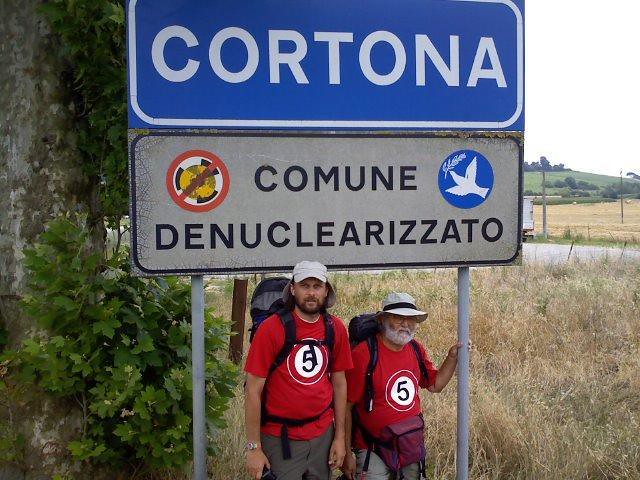
Since all plants in Italy are closed since the 90s won’t it take decades and billions of tax euros to get them back operational again?
Studies are converging on renewable energy systems being cheaper in climates ranging from Australia to the Nordics:
Some recent ones:
Finland, 2025: nuclear scenarios 71–84% higher system cost; unrestricted least-cost optimization builds zero new nuclear. https://www.sciencedirect.com/science/article/pii/S036054422...
Denmark, 2026: system-level LCOE including storage, flexibility and system integration; renewables substantially cheaper than nuclear. https://www.sciencedirect.com/science/article/pii/S036054422...
Australia, CSIRO + AEMO GenCost 2025–26: whole-system modelling including transmission, storage and firming; renewables + storage remain the lowest-cost net-zero pathway. https://www.csiro.au/en/research/technology-space/energy/Ele...
And no you’re not solving it with a buffer (batteries or any kind of other energy storage for that matter)
I mean anything could happen but seems like a long shot
[1] https://www.sciencedirect.com/science/article/abs/pii/S03605...
[2] https://en.wikipedia.org/wiki/Cost_of_electricity_by_source#...
I guess ultimately the nuclear vs renewables discussion is coloured a lot by feelings nowadays.
Resources like this help a lot to form a more nuanced understanding grounded in reality - but otoh I have to admit that a lot of this goes over my head - like even trying to understand how the economy works around this is mind boggling complex. I’ll need a deeper look to understand it better and build a more informed opinion tbh
I’m particularly interested in how they plan to finance reactors in a grid dominated by solar. I wouldn’t be surprised if they legally allow the building of new reactors but then fail to find investors. But perhaps they plan on using them as some sort of strategic assets and will just run them at a loss?
Solar is 15% - a lot but not yet dominated. Solar works at day and demand is also highest during the day so solar should not be an enemy of nuclear.
This is what the OP means - they make no economic sense on most modern grids.
France's EDF Warns Solar, Wind Surge Straining Nuclear Fleet Costs - https://news.ycombinator.com/item?id=47037839 - February 2026
https://web.archive.org/web/20260217122120/https://www.edf.f...
Related:
Wind and solar generated more power than fossil fuels in the EU for the first time in 2025 - https://ember-energy.org/latest-updates/wind-and-solar-gener... - January 22nd, 2026
> Wind and solar overtaking fossil fuels in 2025 can be largely attributed to a staggering rise in solar power. Solar grew by more than a fifth (+20.1%) for the fourth year running. It generated a record 13% of EU power in 2025, above both coal and hydro. This trend was widespread: all EU countries saw growth in solar generation compared to the year before, amid a huge expansion in EU solar installations. Solar provided more than a fifth of electricity in Hungary, Cyprus, Greece, Spain and the Netherlands. Renewables provided nearly half of EU power (48%) as unusual weather conditions caused hydro generation to fall by 12% and wind by 2%, but boosted solar generation. Wind remained the second largest EU electricity source at 17% of EU power, generating more than gas. Signs of a structural shift are clear across the EU, as wind and solar generated more electricity than all fossil sources in 14 of the 27 EU countries in 2025. Over the past five years, wind and solar have experienced massive growth (from 20% in 2020 to 30% in 2025). Fossil fuels have fallen from 37% to 29% in the same period, while hydro and nuclear remained stable or slightly declined.
https://ourworldindata.org/grapher/installed-solar-pv-capaci... (installed solar energy capacity goes brrr)
Nuclear has no real cons other than time/cost of deployment, and it should be a no brainer for a place like Europe without significant energy resources. Once the power plant is built, it provides 50+ years of nearly free energy. It's that or buying gas from Russia.
The uranium needs to be regularly replaced. Europe currently imports virtually all of the uranium used by its nuclear power plants. While Europe has some decommissioned uranium mines, they would have to be reopened, but the known deposits are estimated to cover less than the 50 years you cite, at current levels of nuclear production (much less when expanding production).
So if this is about energy independence rather than cost, I’m not sure that it would be such a great win.
But I just don’t get why it’s being discussed at all - its obviously so much more expensive and time consuming to build than the alternatives
It takes billions to certify a nuclear power plant, and it takes billions more to re-certify it every few decades, to say nothing of the costs of modernization.
To be clear, I consider myself generally pro-nuclear power, but let's not ignore the massive upfront and ongoing capital and operational costs that really undermine this idea that it's free power.
... and cost of operation and the fact that you have radioactive material you need to securely and safely store for quite a bit (which no one has figured out yet)
For at least the past decade, about all I've seen argued about nuclear is that it is not economical. I've been arguing that for around 15 years now.
That being said, it seems finally solar+wind+storage+a little bit of other stuff is becoming cheap enough that it's starting to make a dent in the emissions. Which is fantastic, don't get me wrong. But it's also sad we've lost decades.
Nuclear, moreover, keeps us on the tech tree for space exploration. I don’t think solar is going to lead us to fusion or antimatter powered spaceships.
What does that even mean? Will we have no more wars? Will we overcome capitalist ownership structures? Will we save our planets ecosystems from extinction? Will we finally be able to eradicate hunger and homelessness?
Or are we just talking more fancy gadgets for the rich at the expense of all of the above?
I also don’t believe that fission, fusion or antimatter are on the same branch of the tech tree.
Planets aren't going to be colonized like colonies were on this Earth. Economic growth and prosperity have decoupled not only from fossil fuels, but it's no longer a function of energy consumption in general. Humans simply do not flourish without the Earth ecosystem. The future you paint here is only credible to 13 year-old boys who just finished their third Jerry Pournelle book.
My mom is in her mid 70s and grew up reading Jules Verne and H.G. Wells as a child in Bangladesh. She still imagines a Star Trek future is inevitable. If anything it’s Gen Z that has a small and narrow vision of what’s possible.
I don’t see research into fission power doing anything useful for spacecraft. The big bottleneck right now is getting stuff to orbit. The rest is easy, relatively speaking. And getting stuff to orbit is not practical with nuclear unless you use something like Orion, which has some downsides to put it mildly, and is already doable with 1950s tech.
https://ember-energy.org/countries-and-regions/italy/
> 49% of Italy’s electricity was generated from low-carbon sources in 2025, below the EU average of 71%. As of 1 January 2026, Italy was aiming for 69% of renewable electricity generation by 2030. For the country’s latest renewables targets, see our 2030 Global Renewable Target Tracker.
https://app.electricitymaps.com/map/zone/IT/fifteen_minutes
Record 2026 summer heat impaired nuclear generation in France, Romania, Hungary, and Bulgaria, so I'd be curious how they intend to solve for that as the climate continues to warm (reduced capacity factor from reduced output due to cooling constraints impairs the economics).
France to Upgrade Heat Wave Modeling After Record Nuclear Curbs - https://news.ycombinator.com/item?id=49790006 - September 2026
Europe's Heatwaves Are Putting Nuclear Power Under Pressure - https://news.ycombinator.com/item?id=49466909 - August 2026
Bulgaria's Nuclear Plant Plans First Output Cut Due to Low Danube - https://news.ycombinator.com/item?id=49376860 - August 2026
Record heat is drying up Europe's major rivers, as these striking images show - https://news.ycombinator.com/item?id=49283344 - August 2026
Bloomberg: Hungary Casts Doubt on Nuclear Plant Expansion After Danube Low Levels - https://www.bloomberg.com/news/articles/2026-08-13/hungary-c... - August 13th, 2026
Italy to issue half million non-EU work visas over next three years - https://www.reuters.com/world/italy-issue-half-million-non-e... - June 30th, 2025
It would take 5-10 years to build the power plants and maybe with Chinese aid even faster
Only a severe energy shortage could motivate politicians enough to temporarily skip these, like they did for the LNG terminals. But you can't build a nuclear power plant of any size within a single legislative period so its just not going to happen.
Nuclear energy is a big business for intimates friends, so on the trend that it's a green tech (apparently no carbn footprint, but what about the depleted fuel?) they approved the reopening of this technology.
Why going for SMR?
Well, it's the penalties business model and SMR is ideal because they are on paper, no valid proven commercial implementation. A company wins the contract, in this case i'm not sure if they'll go for a open bid, the contract include research, design, building and so on. At some point the political wind changes, contract canceled and hundreds of milions in contractual penalties to pay. It is essentially a mechanism to transfer public money to private friends, with zero obligation to ever break ground.
It's from 19th century that they are thinking about a bridge between Sicily and mainland. The last time the project was revived, the playbook went exactly as described above: years of studies, cancellation and massive state penalties paid out to contractors for a bridge that still doesn't exist (Sicily and mainland are on different tectonic plates).
No mention there is no national deposit for nuclear waste, especially in a highly sismic territory.
I wonder how much solar, wind and batteries you could get for that, and how quickly it would be deployed
https://www.youtube.com/watch?v=ye012kzWJ3A (1:10:10):
"I'm virtue signaling because I'm Pro nuclear yes it's a luxury belief you're promoting something nuclear power is a luxury belief you heard it here first because they're going to put these things in poor communities and so it's never going to affect your life they're putting them next to Data Center in like Oregon like it's easy for you to say oh I support nuclear look how Progressive I am look how smart I am you haven't internalized the downsides [...]"
Democracy is just lovely.
Have your citizens answer to a straightforward question on a topic twice, have them reject it, both times.
And the government will still go its way.
I'm not against nuclear per se, I'm just baffled at the "democratic" process.
It’s much less frequent than the usual democratic election cycle, where people are also allowed to reevaluate their positions.
I think the public opinion and sentiment has changed quite significantly since 2011 when the last referendum was held.
The current Italian government is massively populist so they wouldn’t do this if they thought people would disagree.
I don’t see any problem with the democratic process here - sure it’s a flawed system but I believe it’s still the best we came up with so far
That being said, many countries consider it a national security issue not to be held hostage to foreign oil.
https://m.youtube.com/watch?v=cbeJIwF1pVY
Once the debt for the initial capital investment is paid off, Nuclear power can be very cheap.
Something like wind and solar combined with batteries would be a more sovereign form of energy generation that is (as a bonus) more decentral and less prone to attacks.
> That being said, many countries consider it a national security issue not to be held hostage to foreign oil.
Spot on. That, plus... peak oil.
It is clear at this point that peak oil was another failed Malthusian projection. I don't think peak oil is guiding much national policy aside from the national security aspects.
https://www.youtube.com/@tfolsenuclear
Any argument that environmentalists run amok is the sole cause of nuclear's failure to launch has to address the fact that these two places, where environmentalists are a lot more likely to get a club to the head than a say at the table, are largely not expanding their nuclear power that much versus, say, solar in China.
…and then people wonder why nuclear isn’t competitive. When you hold one thing under a microscope because “radiation” scares people, we end up with millions dead per year from air and water pollution due to fossil fuels.
The talking point that they’re going green doesn’t stand up to scrutiny.
https://www.globalelectricity.org/china-electricity-producti...
https://en.wikipedia.org/wiki/Electricity_sector_in_China
So yes, it can be reasonably claimed that China is greening. "greening", not "green" -- 49.7% coal is still a lot of CO2.
https://finance.yahoo.com/energy/articles/china-pushes-coal-...
They are installing nuclear power like no other country (1 GW yearly since 2014), and Wikipedia says that 50% of all nuclear capacity being built is in China (https://en.wikipedia.org/wiki/Nuclear_power_by_country): 37 new reactors, followed by India with 6 and Russia, Egypt and Korea with 4. USA and France, which are both pro-nuclear or nuclear neutral, are building 0 reactors. But yeah, China has interests against nuclear power.
You are not helping your case by spreading misinformation and calling other people misinformed by making a strawman ("radiation scares people"). I am against nuclear (or rather not pro-nuclear) because it is not economically sound, because it is massively subsidized by Governments for the private sector to profit.
It would also seem that investing into it may perhaps render significant gains into the future as R&D becomes more involved with actual running systems and funded (skin in the game?)
It seems the only ones who lost by abandoning their nuclear programs were European countries (specially Germany) in detriment of Russia and other Oil trading countries... It's even probable that much of the "bad press" nuclear has had for the past decades was in fact instigated by oil-producing countries doesn't it?
Nuclear's share of electricity in China is below 4% and dropping. They do not use a significant amount of nuclear. That this insignificant amount of nuclear is more than any other country is quite telling.
If not, reading a list of this helps:
https://en.wikipedia.org/wiki/Lists_of_nuclear_disasters_and...
But sure, oil leaks can be bad as well. Solar leaks on the other hand seem bearable.
I just don't think it is a good idea to replace something dirty with something else dirty that is indeed quite safe if all goes well, but is horrible if something goes wrong.
Italy has lot's of sun and wind (and geothermal potential).
When something is profitable in the sense that a few oligarchs make more an more money, I see it as a bug, not a feature.
I literally would’ve been better off flying to New York. I still have scars and nerve damage from the incredibly poor care in Italy’s medical system.
In the US, I was rushed into the ER in an ambulance and seen immediately after a bicycle accident — and that was just because they were worried about the speed at which the accident occurred. They had me patched up within the hour. I was fine, road rash and sore for a couple weeks.
There’s no silver bullet here, but I’m very sure that healthcare is not a good analogy for nuclear power.
I’m also very sure that anyone that advocates for government healthcare should try actually using it in one of these countries. I hope you enjoy waiting and long-term adverse health effects from poor, delayed, and inaccessible care.
I'm all for improving the quality of life for society. In the end the goal is to live well, not to destroy our living conditions for a few oligarchs to make more money. But "profitability" is not generally optimised like this, unfortunately.
If a power generation system costs more to operate than the value of power we get out of it, it's probably not very useful. I think that's what we're talking about here.
There is more than money. There is stability (not depending on foreign oil, peak oil, etc), there is climate change, etc.
A lot of countries also use it to help subsidize (or help cover up the costs of) their military nuclear programs.
Having the consumers of the electricity pay for has a lot of advantages!
While fission reactors are still the cheaper initial energy choice (like a future cancer patients love of cheap cigarettes.) Small Modular reactors are a fools errand for most places, as they have all the same security, labor, and maintenance issues of full sized installations. Thus, instead of repairing one of four turbines every few years, the contaminated components must now be reprocessed or safely hidden away on mass.
Maybe fine for submarines or aircraft carriers, but for massive infrastructure it is trivial to prove it causes major long-term problems.
Anyone that has ever purchased a property with an old leaky heating-oil tank nasty surprise site-reclamation cost... will understand the initial unit price never covers the actual clean up cost. =3
https://www.neimagazine.com/news/us-japan-in-smr-deal/
Italy should be buying proven French technology instead.
Given the outcome of Flamanville 3 and the that the proposed subsidies for the EPR2 fleet are ruinously expensive France is unable to build competitive new nuclear.